Entertainment
Coyote vs. Acme Movie: 7 Brilliant Reasons to Watch
Discover why the Coyote vs. Acme movie stands out: a hilarious Looney Tunes courtroom comedy with heart, sharp satire, and unforgettable cartoon chaos.
Contents
- 1. Coyote vs. Acme Movie Review: A Looney Tunes Comeback With Real Bite
- 2. What Is the Coyote vs. Acme Movie About?
- 3. Why the Courtroom Story Works
- 4. A Strong Blend of Live Action and Animation
- 5. The Film’s Best Source of Humor
- 6. The Corporate Satire Gives the Film More Weight
- 7. Why the Film’s Release Story Matters
- 8. Is Coyote vs. Acme Worth Watching?
- 9. Final Verdict
Coyote vs. Acme Movie Review: A Looney Tunes Comeback With Real Bite
The Coyote vs. Acme movie turns one of animation’s oldest running jokes into a full courtroom battle. Wile E. Coyote is no longer chasing the Road Runner alone—he is taking Acme Corporation to court.
What follows is a lively mix of live-action comedy, computer animation, legal drama, and classic Looney Tunes mischief. The result is a family film with enough visual gags for younger viewers and enough corporate satire to keep adults engaged.
What Is the Coyote vs. Acme Movie About?
The Coyote vs. Acme movie follows Wile E. Coyote after yet another Acme product fails spectacularly. Rockets misfire, traps collapse, and supposedly foolproof inventions leave him bruised, broke, and no closer to catching the Road Runner.
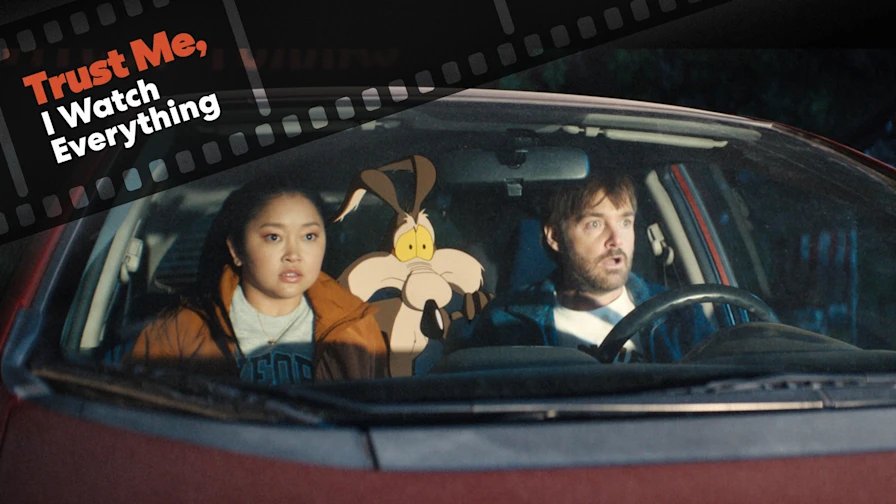
Rather than accept another setback, Wile E. seeks legal help. He finds Kevin Avery, a struggling Albuquerque lawyer played by Will Forte. Avery initially sees the case as a modest settlement opportunity, not a major legal fight.
That changes when Avery’s niece and law intern, Paige, begins organizing evidence from Wile E.’s long history of failed Acme purchases. The pile of broken gadgets becomes the foundation of a much larger claim.
The film’s central question is simple: can a cartoon character hold a massive corporation responsible for years of defective products?
The Main Cast
The film combines human performers with animated Looney Tunes characters. Its principal cast includes:
- Will Forte as Kevin Avery
- Lana Condor as Paige Avery
- John Cena as Buddy Crane
- Tone Bell as Sal Maltese
- Martha Kelly as Dottie Jones
- Eric Bauza as several animated characters
Cena plays Buddy Crane, Acme’s confident corporate attorney and Kevin’s former law-school rival. His performance gives the film a recognizable antagonist without turning the story too dark for family audiences.
The Coyote vs. Acme movie also brings several familiar Looney Tunes characters into the legal dispute, including Bugs Bunny, Foghorn Leghorn, Tweety, Porky Pig, and the Road Runner.
Why the Courtroom Story Works
A Wile E. Coyote lawsuit sounds like a one-joke premise. The film succeeds because it keeps developing that idea instead of repeating it.
Each failed invention becomes evidence. Every old gag gains a new purpose. The anvil, rocket, spring, magnet, and explosive device are no longer just tools of slapstick; they become exhibits in a case against Acme.
That structure gives the Coyote vs. Acme movie a clear narrative engine. The audience is not simply waiting for the next accident. Viewers also want to know whether Kevin can build a convincing case and whether Acme is hiding something more serious.
The legal setup adds momentum between the cartoon sequences. It also creates room for the human characters to change.
Kevin Avery’s Personal Arc
Kevin begins the story as a discouraged lawyer who has stopped fighting for difficult clients. He prefers quick settlements and manageable cases because they require less risk.
Wile E.’s persistence gradually challenges that attitude. The coyote may fail constantly, but he never gives up on the pursuit. That contrast becomes central to Kevin’s development.
The Coyote vs. Acme movie uses their partnership to explore perseverance without making the message feel overly sentimental. Kevin does not suddenly become heroic because of one speech. His transformation grows through meetings, setbacks, courtroom pressure, and his growing loyalty to Wile E.
Wile E. Coyote’s Silent Performance
One of the film’s smartest creative decisions is preserving Wile E. Coyote’s near-silent personality. He communicates through gestures, expressions, signs, and carefully timed reactions.
That forces the human characters to respond to him rather than allowing dialogue to explain every emotion. His frustration remains physical and visual, which connects the feature to the original shorts.
The Road Runner also retains his minimal communication style. The Coyote vs. Acme movie understands that these characters do not need long conversations to be funny. A pause, a sign, or a single “Beep Beep” can carry an entire exchange.
A Strong Blend of Live Action and Animation
The film places cartoon characters in a recognizable human world rather than building an entirely separate cartoon city. Lawyers, offices, courtrooms, newsrooms, and corporate facilities provide the setting for the animated chaos.
That choice gives the story a more grounded visual identity. Instead of making every frame loud and colorful, the production allows the Looney Tunes characters to stand out against ordinary locations.
The approach also supports the film’s satirical theme. Acme looks more like a powerful modern corporation when it operates through lawyers, research departments, public relations, and legal settlements.
The Coyote vs. Acme movie does not always pursue the same visual richness as Who Framed Roger Rabbit. Its animation and live-action integration are more contemporary and digitally polished. Still, the contrast between realistic environments and exaggerated cartoon physics creates many effective comic moments.
The Film’s Best Source of Humor
The comedy works on several levels.
For children, there are rockets, explosions, collapsing platforms, giant mallets, and impossible escapes. For adults, there are jokes about corporate language, legal maneuvering, advertising, and companies avoiding responsibility.
Acme’s public image becomes part of the joke. The corporation presents itself as respectable and family-friendly while producing devices that repeatedly cause spectacular injuries.
The Coyote vs. Acme movie also finds humor in the courtroom process. Wile E.’s evidence is not abstract. It is a mountain of physical objects collected from years of failed experiments.
That visual detail gives the lawsuit a satisfying absurdity. The case is ridiculous, but the evidence is undeniable.
Looney Tunes References Without Requiring Expert Knowledge
Longtime fans will notice references to classic creators and characters. The Avery, Jones & Maltese law firm name, for example, nods toward important figures in Looney Tunes history.
These details reward dedicated viewers, but the film does not depend on them. Someone unfamiliar with animation history can still understand the main story, follow the courtroom conflict, and enjoy the physical comedy.
That accessibility matters. A nostalgia-driven movie can become too focused on references. The Coyote vs. Acme movie works better when its callbacks support the story rather than replace it.
The Corporate Satire Gives the Film More Weight
At its core, the movie is about accountability.
Acme has spent years selling products that repeatedly malfunction. In the original cartoons, that failure is simply part of the joke. The feature asks what would happen if the customer documented every incident and demanded answers.
The idea is especially effective because Acme is not presented as a faceless force of nature. It has executives, lawyers, scientists, internal information, and a carefully managed public reputation.
This gives the Coyote vs. Acme movie a light but recognizable critique of corporate power. The film does not become a heavy legal thriller, yet it understands why audiences enjoy seeing an underdog challenge a company with more money and influence.
The story also touches on animal welfare and scientific ethics. Those themes add substance without overwhelming the comedy.
Why the Film’s Release Story Matters
The movie attracted unusual attention before audiences could see it. Warner Bros. initially shelved the completed film in 2023 as part of a tax-related decision. Public backlash followed, and the project was later made available for another distributor to acquire. Ketchup Entertainment eventually obtained the rights.
That history shaped the way people viewed the Coyote vs. Acme movie. It was no longer just another studio comedy. It became an example of a finished film that audiences and filmmakers believed deserved a chance.
The release story also creates an unavoidable irony. A movie about a corporation resisting responsibility nearly disappeared because of a corporate decision. The parallel is so obvious that the film’s own Acme jokes take on an additional meaning.
The production’s eventual theatrical release gave viewers the opportunity to judge the movie itself rather than its business history.
Is Coyote vs. Acme Worth Watching?
Yes, particularly for viewers who enjoy character-driven family comedies.
The Coyote vs. Acme movie is not merely a collection of extended cartoon gags. Its strongest scenes come from the relationship between Kevin and Wile E., the rivalry between Kevin and Buddy, and the growing legal threat to Acme.
The film is also a good choice for families who want something more substantial than nonstop spectacle. Its story emphasizes persistence, teamwork, and standing up to powerful institutions.
Adults may appreciate the corporate satire and the references to courtroom dramas. Children will likely respond to the visual comedy and familiar characters. Looney Tunes fans get the pleasure of seeing Wile E. Coyote placed at the center of a story rather than used only as a supporting gag.
Possible Weaknesses
The film’s plot becomes more complicated as the legal mystery develops. Some of the revelations and courtroom mechanics may feel less sharp than the comedy.
The live-action setting also means viewers should not expect a completely cartoon-like world. The movie’s visual style is more restrained than a traditional Looney Tunes short, and some fans may prefer a brighter, more chaotic presentation.
Even so, those choices help the feature maintain a coherent story. The Coyote vs. Acme movie has enough structure to sustain its feature-length runtime without abandoning the characters’ comic identity.
Final Verdict
The Coyote vs. Acme movie proves that a simple cartoon premise can support a surprisingly warm and entertaining feature. Its courtroom setup gives Wile E. Coyote a new challenge, while Kevin Avery’s personal journey adds emotional direction.
The result is fast, funny, and more thoughtful than its title suggests. It respects the classic characters, gives the human cast meaningful roles, and uses Acme’s absurd products to build both jokes and story.
For families, animation fans, and anyone curious about the film that nearly vanished before release, Coyote vs. Acme is well worth seeing. Its biggest triumph is that it does not treat nostalgia as enough. It builds a real movie around the jokes—and lets Wile E. Coyote make his case.