A man and a woman were rescued in Nepal 10 days after devastating floods. Learn where survivors were found and why hundreds remain trapped.
Nepal Flood Rescue Efforts Find Two More Survivors
Two people were rescued in separate operations in Nepal on Saturday, 10 days after catastrophic floods swept through parts of the country.
One survivor was pulled from a hydropower tunnel, while a woman was found alive inside a mud-covered home in Nuwakot. Their rescues offered a rare sign of hope as emergency crews continued searching for hundreds of workers believed to be trapped underground.
The latest Nepal flood rescue operations came as authorities expanded efforts around damaged hydropower projects and other flood-hit communities.
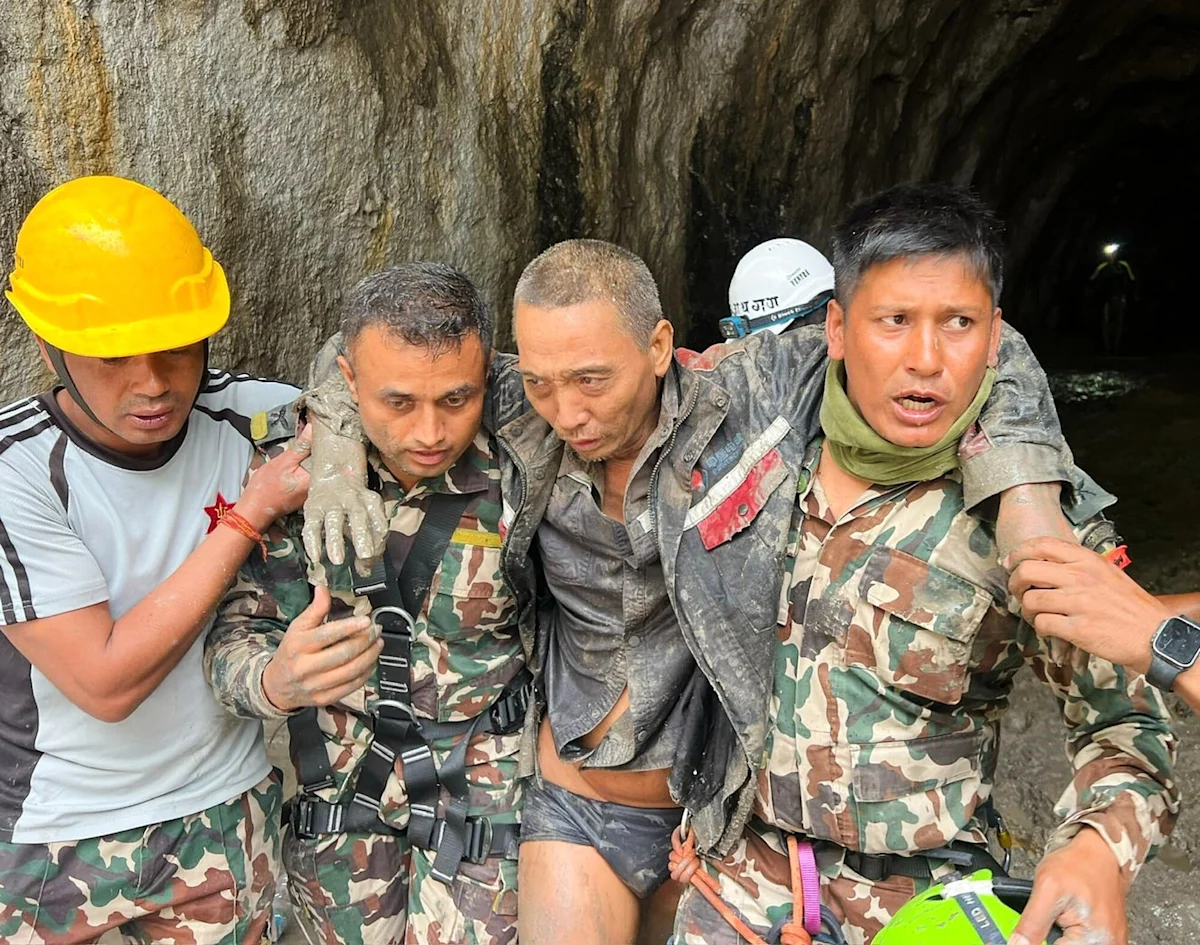
A joint team of Nepalese military personnel and South Korean disaster specialists rescued a man from a tunnel at the Trishuli 3A hydropower project.
The tunnel extended approximately 738 feet underground. Nepal’s army said the survivor was taken out of the structure and flown by helicopter for medical evaluation.
Images released by the army showed a medic checking the man during the flight. He was later reported to be in stable condition.
The man was identified as a Chinese national. Video released by Chinese state broadcaster CCTV showed rescuers carrying him from the tunnel after locating him inside the damaged project.
Survivor Described Hearing Rescue Crews
In audio shared by CCTV, the man said he repeatedly shouted whenever he saw lights from rescue teams. He said the crews apparently could not hear him at the time.
“When they rescued me today, when they shone the light before my eyes, I couldn’t believe it,” he said, according to the broadcast.
His rescue brought the number of workers pulled alive from the Trishuli hydropower project to three. Two Nepalese workers had been rescued from a tunnel the previous day.
Woman Found Alive in Flood-Damaged Home
A second survivor was located in Nuwakot, a town heavily affected by the floods.
Nepal’s army said rescuers found the woman inside a house and prepared to airlift her to Kathmandu for treatment. Photographs showed her covered in mud as emergency workers helped her out of the structure.
Rescuers gave her bottled water before wrapping her in a gray blanket. Officials had not immediately released her identity or provided additional details about how long she had been trapped.
The discovery highlighted the continuing risks in communities where homes, roads, and other buildings were damaged by floodwaters and debris.
Hundreds May Still Be Trapped in Tunnels
Rescue teams have increasingly focused on 12 hydropower projects across Nepal. Authorities estimate that about 900 workers are missing from the sites, with roughly 500 believed to be trapped in tunnels.
Specialist teams from Nepal, India, China, South Korea, and the United States have been assisting with the search. Their work involves clearing debris, inspecting damaged structures, and entering tunnels where survivors may still be located.
The operations are technically difficult because flooding may have destabilized underground passages and blocked access points. Rescue crews must also work around heavy debris and damaged infrastructure.
Disaster Has Caused Widespread Loss
At least 1,300 people were killed in the Aug. 26 floods, according to Nepal’s disaster management agency. More than 5,000 others remained missing as of Saturday.
Officials said the flooding was likely linked to a glacier collapse. The event damaged homes, transportation routes, and major infrastructure across affected areas.
The high number of missing people has complicated the response. Search teams are working across multiple locations while authorities try to account for residents, workers, and people who may have been separated from their families.
What Happens Next in the Rescue Operation?
Emergency teams are expected to continue searching hydropower facilities, tunnels, and flood-damaged communities in the coming days.
The latest Nepal flood rescue operations show that survivors may still be found more than a week after the disaster, particularly in enclosed structures that provide some protection from the water and debris.
Authorities are also expected to prioritize medical evacuations, family reunification, and the recovery of those who remain missing. For survivors pulled from the wreckage, the immediate focus will be medical care and stabilization as Nepal continues responding to one of its deadliest recent disasters.