The Bad Bunny Super Bowl halftime show won seven Emmys after attracting 128.2 million U.S. viewers. Here’s what made the performance stand out.
Bad Bunny Super Bowl Halftime Show Takes Home 7 Emmys
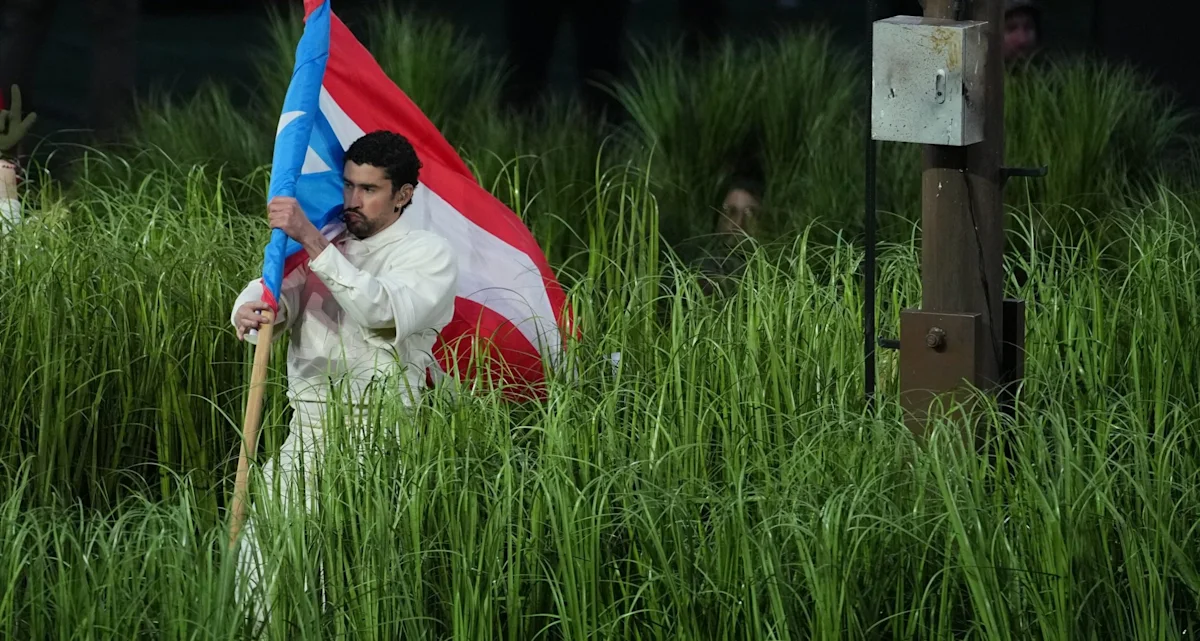
Bad Bunny’s Super Bowl LX halftime performance earned seven Emmy Awards at this week’s Creative Arts ceremony, recognizing nearly every major production department involved in the show.
The Apple Music Super Bowl LX Halftime Show Starring Bad Bunny won for music direction, choreography, sound mixing, lighting design, technical direction, camera work, and directing. The awards highlighted the scale and complexity of the live production.
Jay-Z, one of the show’s executive producers, also added another Emmy to his résumé, bringing his total to three.
A Record-Setting Global Audience
The performance drew approximately 128.2 million viewers in the United States and an estimated 4.2 billion viewers worldwide.
Those numbers made the show one of the most widely watched entertainment events of the year. Bad Bunny’s international popularity helped attract a broad audience, while the Super Bowl platform introduced his music and performance style to viewers who may not regularly follow Latin music.
The broadcast also generated significant discussion because Bad Bunny performed primarily in Spanish.
Spanish-Language Performance Became a Political Flashpoint
Some critics objected to the use of Spanish during the halftime show, arguing that a major American broadcast should feature more English-language music. Others criticized the choreography, song choices, and the show’s perceived political themes.
Several complaints claimed the performance included offensive language or inappropriate material. However, Bad Bunny used radio edits of songs including “Safaera” and “Tití Me Preguntó.”
Other complaints alleged that the performance was too sexual, politically motivated, or disrespectful to veterans. The criticism reflected a broader debate over language, culture, and representation in mainstream American entertainment.
FCC Reviewed More Than 2,000 Complaints
The Federal Communications Commission received more than 2,000 complaints connected to the broadcast, with more than 100 specifically targeting Bad Bunny’s performance.
The complaints covered a range of issues, including alleged vulgarity, choreography, political messaging, and the use of Spanish. Some claims were difficult to distinguish from deliberate provocation or online trolling.
Following the complaints, the FCC reviewed the performance. The agency did not find a violation that warranted enforcement action.
That outcome meant the complaints did not result in penalties or other regulatory action against the broadcast.
Critics Also Praised the Performance
While the show faced backlash, many critics praised its themes of inclusion and unity.
Bad Bunny used the stage to present Latin music and Puerto Rican identity to a global audience. Supporters viewed the performance as an important cultural moment, especially during a period when immigration, language, and national identity remain highly debated issues in the United States.
The reaction was not universally political. Some viewers simply focused on the show’s staging, choreography, lighting, camera work, and musical execution.
A Rival Halftime Show Failed to Earn an Emmy
The backlash contributed to the creation of an alternative halftime production organized by Turning Point USA.
That broadcast featured Kid Rock and several country-music performers and was promoted as a more traditional alternative to the official Super Bowl show. Despite the attention surrounding it, the rival production did not win an Emmy.
The contrast underscored the difference between political visibility and recognition from the television industry. The official performance received awards across seven technical and creative categories.
Why the Emmy Wins Matter
The Bad Bunny Super Bowl halftime show was not recognized only for its headline performer. The awards also honored the large production team responsible for turning a live stadium performance into a television event.
Each Emmy reflected a different part of that operation:
- Music direction: Coordinating the musical performance and arrangements
- Choreography: Designing and executing the movement onstage
- Sound mixing: Balancing vocals, instruments, crowd noise, and broadcast audio
- Lighting design: Creating the visual atmosphere inside the stadium
- Technical direction: Managing the complex live television production
- Camera work: Capturing the performance for viewers at home
- Directing: Coordinating the full broadcast in real time
Together, the awards recognized both the artistic and technical effort behind the show.
Bad Bunny’s Super Bowl Performance Leaves a Lasting Mark
The performance generated controversy, but its industry recognition was clear. Seven Emmy wins confirmed that the production succeeded on multiple levels, from choreography and visual design to directing and technical execution.
The broadcast also demonstrated the reach of Spanish-language music in the United States and around the world. Whatever viewers thought of the cultural debate surrounding the show, the Emmy results established the Bad Bunny Super Bowl halftime show as one of the most accomplished productions in the event’s history.