Business
Oil Prices Near $100: 5 Risks Behind the Surge
Oil prices are nearing $100 as Middle East attacks threaten supply. Learn why Goldman Sachs sees a possible $120 Brent scenario.
Contents
- 1. Oil Prices Approach $100 as Middle East Conflict Intensifies
Oil Prices Approach $100 as Middle East Conflict Intensifies
Oil prices climbed sharply Tuesday as fresh attacks in the Middle East raised concerns about energy infrastructure and shipping routes. Brent crude approached $100 a barrel, while U.S. West Texas Intermediate moved toward $94.
The rally reflects more than short-term market anxiety. Traders are weighing possible supply disruptions, a global deficit and rising risks around the Strait of Hormuz, one of the world’s most important oil corridors. Yahoo
Brent and WTI Move Higher
Brent crude futures rose approximately 2.3% to about $98.50 a barrel after briefly passing $99. West Texas Intermediate futures gained roughly 2.7% to trade near $94.
The moves placed both benchmarks near their highest levels in about two months. Oil prices have remained highly sensitive to military developments because even limited disruptions can affect shipping schedules, insurance costs and available cargoes.
The market’s reaction was especially strong because the latest violence involved energy facilities and shipping routes in the Persian Gulf and Red Sea regions.
Saudi Energy Facilities Reportedly Halt Operations
Saudi Arabia reportedly suspended operations at energy facilities in its southern region following attacks claimed by the Houthi militant group.
The Houthis have also been linked to disruptions involving Saudi oil shipments through the Red Sea. Any prolonged interruption could force tankers to take longer routes, increasing transportation costs and delaying deliveries.
For oil markets, the location of an attack matters almost as much as the physical damage. A threat near production facilities can affect supply expectations immediately, even before analysts know how much oil has actually been removed from the market.
U.S.-Iran Conflict Adds to Supply Concerns
The recent attacks come as fighting between the United States and Iran has intensified after a period of relative restraint.
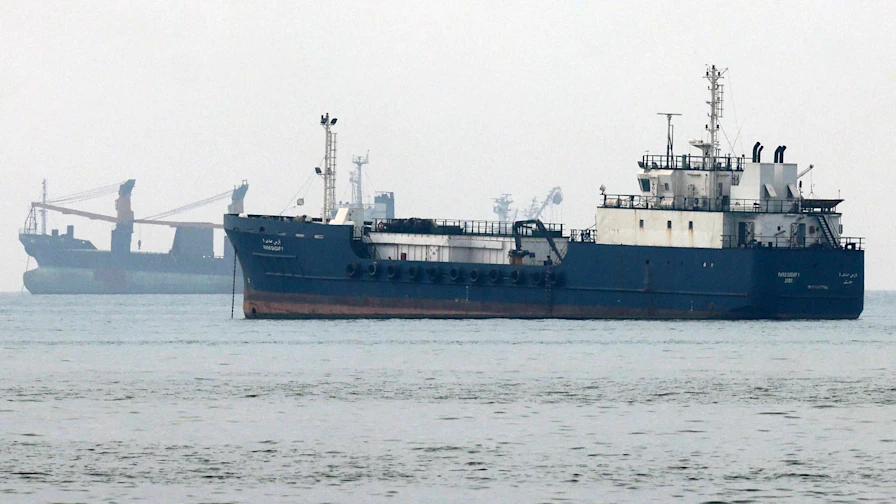
The United States recently struck three Iranian crude oil tankers after Iran’s Revolutionary Guard launched ballistic missiles at two U.S. Navy ships, according to U.S. Central Command. Two tankers were reportedly disabled and a third was destroyed. No American service members were injured, according to the command. Yahoo
The escalation has increased concern that the conflict could expand to include oil infrastructure, tanker traffic or strategic waterways.
That possibility has helped push oil prices higher. Energy traders typically add a geopolitical premium when they believe a conflict could reduce future supply, even if current production has not yet fallen significantly.
Goldman Sachs Sees a Possible $120 Scenario
Goldman Sachs raised its price forecasts for both major oil benchmarks. The bank’s oil strategy team now expects December Brent futures to reach $85 a barrel and WTI futures to reach $80. Those projections are $5 higher than its previous estimates.
For 2027, the bank expects Brent to trade around $80 and WTI near $75 under its base-case outlook. Yahoo
Goldman Sachs also outlined a more severe scenario. If supply from the Persian Gulf remains substantially disrupted, Brent crude could rise to $120 a barrel.
That is not the bank’s central forecast. It is an upside risk tied to a prolonged interruption of Gulf exports and intensified attacks on vessels traveling through the Strait of Hormuz and the Red Sea.
Why the Strait of Hormuz Matters
The Strait of Hormuz is a narrow waterway between Iran and Oman. Before the current conflict, it carried approximately 20% of global oil volumes.
A sustained disruption would be difficult to replace quickly. Pipelines and alternate shipping routes can carry some oil, but they do not have enough capacity to fully compensate for a prolonged closure or severe slowdown.
Iran has said it is close to reaching an agreement with Oman on a temporary safe route for ships passing through the strait. The proposed arrangement reportedly does not include the United States, which has opposed any permanent Iranian control over the waterway. Yahoo
The Global Oil Market Is Already in a Deficit
The geopolitical shock is occurring as the global oil market faces a supply deficit of about 1 million barrels per day, according to Goldman Sachs strategists.
That imbalance leaves less room for unexpected disruptions. When inventories are plentiful, countries and companies can draw on stored crude while supply problems are resolved. When inventories are tight, even a temporary outage can cause a sharper price response.
Goldman Sachs said private-sector stockpiles in OECD countries have not declined dramatically. Instead, recent drawdowns have come from government strategic reserves, oil already loaded onto ships and inventories held in China.
China has also reduced crude imports to approximately 60% of last year’s level, according to the bank. That weaker demand has helped offset some of the pressure created by supply disruptions. Yahoo
Higher Oil Prices Are Reaching Drivers
The effect is already visible at U.S. gas stations. The national average gasoline price reached $4.15 a gallon Tuesday, up from $4.02 one month earlier, according to AAA.
If crude remains near $100, consumers could face additional pressure on gasoline and diesel prices. Transportation companies may also pass higher fuel costs into freight rates, raising expenses for retailers and manufacturers.
Oil prices can influence more than fuel. Higher energy costs can affect:
- Airfare and shipping
- Food distribution
- Heating and electricity
- Plastics and chemical production
- Construction materials
- Household goods
The size and speed of the impact depend on how long crude remains elevated. A brief price spike may have limited consequences, while several months of high prices could feed into broader inflation.
Analysts Describe the Market as Unstable, Not Fully Escalated
Jorge León, head of geopolitical analysis at Rystad Energy, said the market remains in a state of uncertainty. He argued that the latest exchange of attacks has not yet represented a decisive escalation by either side.
That assessment helps explain why oil prices have risen without immediately reaching Goldman Sachs’ $120 scenario. Traders are responding to the possibility of disruption, but they are also accounting for diplomacy, alternate supply routes and the possibility that the conflict remains contained.
The next major market signal will likely come from shipping activity through the Strait of Hormuz and the Red Sea. A sustained reduction in tanker traffic would put significantly more upward pressure on crude.
For now, oil prices are being driven by a volatile mix of military risk, limited supply flexibility and uncertain diplomacy. Brent nearing $100 reflects the market’s concern—but whether it moves toward $120 will depend on how long regional disruptions last and whether key shipping routes remain open.