Entertainment
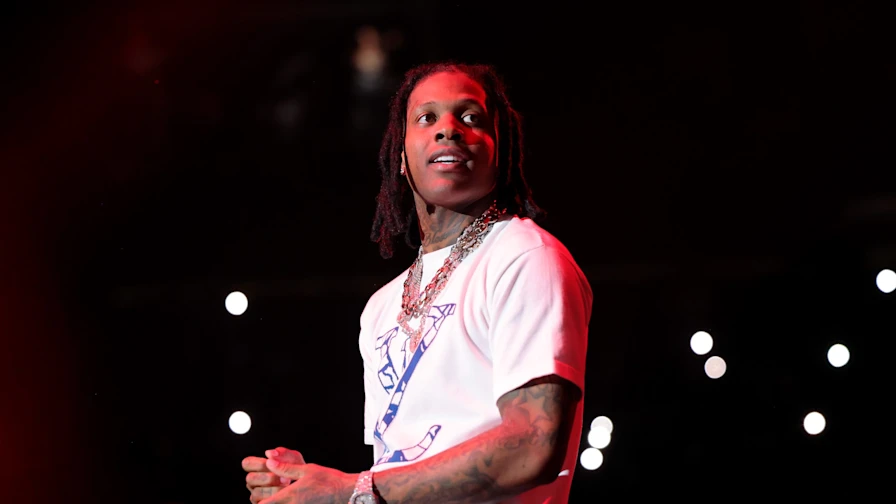
Lil Durk Acquitted: 5 Key Takeaways From the Trial
Lil Durk was acquitted of murder-for-hire charges in a Los Angeles federal trial. Here’s what the jury decided, what prosecutors alleged, and what comes next.
Contents
- 1. Lil Durk Acquitted in Federal Murder-for-Hire Trial
- 1.1. Lil Durk Acquitted of All Major Charges Against Him
- 1.2. What Prosecutors Alleged
- 1.3. The Defense Challenged Cooperating Witnesses
- 1.4. Two Other Defendants Received Mixed Verdicts
- 1.5. Why the Verdict Matters for Lil Durk
- 1.6. Lil Durk’s Career and Public Profile
- 1.7. The Trial Drew Heavy Public Attention
- 1.8. What the Acquittal Does Not Establish
- 1.9. What Happens Next?
- 1.10. A Major Legal Victory for the Rapper
Lil Durk Acquitted in Federal Murder-for-Hire Trial
Rapper Lil Durk has been acquitted of murder-for-hire, conspiracy, and stalking resulting in death charges in a Los Angeles federal case.
The verdict followed a high-profile trial involving allegations that the Chicago rapper directed an attack targeting rapper Quando Rondo. The shooting killed Rondo’s cousin, Saviay’a Robinson, after several gunmen opened fire near a Los Angeles shopping center in 2022.
The verdict resolves the criminal charges against Durk in this trial, but the case also produced convictions and acquittals involving two other defendants.
Lil Durk Acquitted of All Major Charges Against Him
A federal jury found Durk not guilty of the charges prosecutors brought against him, according to reporting on the verdict.
The charges included:
- Murder-for-hire
- Conspiracy
- Stalking resulting in death
Durk’s legal name is Durk Banks. Prosecutors argued that he helped organize an attack intended for Quando Rondo, whose legal name is Tyquian Bowman.
The shooting did not kill Bowman. Instead, Robinson, his cousin, was fatally wounded during the attack.
An acquittal means the jury found that prosecutors had not proved the charges beyond a reasonable doubt. It does not mean the jury determined that no shooting occurred. Rather, the government did not persuade the panel that Durk was criminally responsible under the specific charges presented at trial.
What Prosecutors Alleged
The prosecution argued that Durk arranged the attack as retaliation for the death of his friend, rapper King Von.
King Von, whose legal name was Dayvon Bennett, was fatally shot in Atlanta in 2020. The incident occurred after a confrontation outside a hookah lounge involving members of Von’s group and Bowman’s entourage.
According to prosecutors, the Atlanta shooting created a motive for an attack on Rondo. They alleged that Durk used his money, influence, and connections to help arrange the attempted killing.
The prosecution’s account centered on an alleged plan to target Bowman. Three gunmen reportedly fired 18 rounds at the vehicle carrying Bowman and Robinson near the Beverly Center in Los Angeles.
Robinson was killed. Bowman survived.
Prosecutors said Durk played a leadership role
Assistant U.S. Attorney Ian Yanniello acknowledged that prosecutors were not claiming Durk personally fired a weapon at the scene.
Instead, the government argued that the alleged plot could not have happened without Durk’s direction or support. Prosecutors portrayed him as the person who financed or enabled the operation rather than as one of the gunmen on the ground.
That distinction was central to the case. The jury had to decide whether the evidence established that Durk knowingly participated in a murder-for-hire scheme and related stalking offenses.
The Defense Challenged Cooperating Witnesses
The government relied substantially on testimony from cooperating witnesses.
Those witnesses included:
- Kacey Hester, also known as OTF Jam
- Keith Jones
- Kavon Grant, a former assistant to Durk
Defense attorneys argued that the witnesses had strong reasons to cooperate with prosecutors. They described them as unreliable informants seeking reduced sentences or other benefits in their own legal matters.
Attorney Brian Steel attacked the witnesses’ credibility during the defense case. Another defense lawyer, Drew Findling, accused Grant of manipulating investigators and prosecutors.
The defense’s strategy was straightforward: persuade jurors that the government’s most important testimony came from witnesses whose accounts could not be trusted without stronger independent evidence.
Two Other Defendants Received Mixed Verdicts
Deandre Wilson and David Lindsey were also tried in connection with the case.
The jury convicted both men of:
- Conspiracy to commit stalking
- Stalking using a dangerous weapon
- Stalking resulting in death
However, the jury acquitted both defendants of the murder-for-hire charges.
That combination of verdicts indicates that the jury distinguished between the various allegations rather than treating the case as one all-or-nothing question.
Wilson’s attorney argued that his client was merely a passenger and was not one of the shooters. The mixed outcome suggests that the jury accepted some elements of the government’s case against Wilson and Lindsey while rejecting the murder-for-hire counts.
The defendants’ convictions and potential sentences are separate from Durk’s acquittal.
Why the Verdict Matters for Lil Durk
The acquittal removes the possibility of a conviction on the federal charges in this trial, including the most serious allegations tied to the 2022 shooting.
The case had placed Durk’s career and personal freedom at significant risk. A conviction could have resulted in a lengthy prison sentence, depending on the charges and sentencing calculations.
Instead, the rapper leaves the trial without a guilty verdict on the counts brought against him.
The legal result also differs from the public narrative surrounding the case. Prosecutors presented Durk as a powerful figure who used his resources to retaliate against a rival. The defense presented the case as one built around unreliable witnesses and an insufficient connection between Durk and the shooting.
The jury ultimately sided with the defense’s position to the extent necessary for an acquittal.
Lil Durk’s Career and Public Profile
Durk is one of the most prominent artists associated with Chicago’s drill music movement. The scene has also produced artists such as Chief Keef, Lil Reese, and G Herbo.
His last five solo albums reportedly debuted in the top five of the Billboard 200. His 2023 collaboration with J. Cole, “All My Life,” reached No. 2 on the Billboard Hot 100.
The song later won a Grammy Award for Best Melodic Rap Performance.
That commercial success made the federal case particularly significant within the music industry. Durk was not only facing serious criminal allegations; he was also one of rap’s most visible working artists.
The Trial Drew Heavy Public Attention
The proceedings attracted large crowds of fans and tourists around the courthouse. Celebrities, including Kanye West and rapper MGK, appeared in support of Durk.
The level of attention reflected the case’s connection to several major themes in hip-hop: regional rivalries, retaliation, street violence, loyalty, and the relationship between an artist’s public image and criminal allegations.
For prosecutors, the challenge was proving a specific federal case rather than relying on Durk’s reputation or lyrics. For the defense, the task was to keep jurors focused on the reliability of the evidence and the government’s burden of proof.
What the Acquittal Does Not Establish
The Lil Durk acquittal does not establish who fired the weapons during the Los Angeles shooting. It also does not erase the death of Robinson or answer every factual question surrounding the attack.
It means that jurors did not find the evidence sufficient to convict Durk of the specific charges against him.
That distinction is important in criminal cases. A defendant may be acquitted because prosecutors fail to prove intent, participation, identity, or another required element. The legal outcome is based on the evidence and charges presented in court.
What Happens Next?
The federal case against Durk ended with his acquittal on the charges listed in the trial. The convictions involving Wilson and Lindsey remain separate matters.
Any future legal developments would depend on additional proceedings, sentencing issues involving the convicted defendants, or other cases unrelated to the verdict.
For Durk, the immediate result is clear: he was found not guilty in the murder-for-hire trial that alleged he helped organize an attack against Quando Rondo.
A Major Legal Victory for the Rapper
The Lil Durk acquittal represents a major legal victory for the Chicago rapper after a trial built around a deadly shooting, alleged retaliation, and testimony from cooperating witnesses.
Prosecutors argued that Durk used his influence to arrange an attack. His defense maintained that the government’s witnesses were unreliable and that the evidence did not prove his involvement beyond a reasonable doubt.
The jury rejected the prosecution’s case against him. While two other defendants were convicted on stalking-related charges, Durk was acquitted of the charges that threatened to define the next chapter of his career.