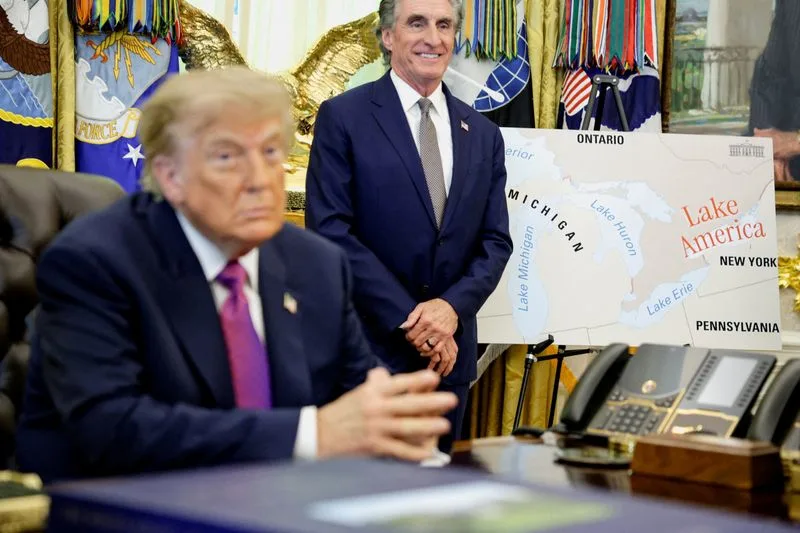
Lake America: What Trump’s Renaming Order Really Changes
President Donald Trump has ordered U.S. agencies to refer to Lake Ontario as “Lake America,” adding a symbolic dispute to already strained relations with Canada. The order changes federal usage in the United States, but it does not force Canada or international organizations to adopt the new name.
What Trump’s Lake America Order Does
Trump announced the change on August 27, 2026, saying the name would take effect immediately. The lake is one of North America’s five Great Lakes and borders New York on the U.S. side and Ontario on the Canadian side.
The executive order applies to the way the U.S. federal government refers to the body of water. Federal agencies may update documents, websites, maps, and other official materials to use “Lake America.”
That authority has clear limits. Canada is not required to change its terminology, and neither are international organizations, state governments, private companies, news outlets, or the public. The order also does not alter the border, navigation rights, environmental agreements, or ownership of the lake.
The practical effect is therefore narrower than the political message. It changes federal nomenclature—not the geography itself.
Canada Rejects the New Name
Canadian Prime Minister Mark Carney quickly dismissed the renaming effort. He argued that Lake Ontario’s name predates both Canada and the United States and should remain unchanged.
The name has historical connections to the Wendat language and is commonly understood to refer to the lake’s beauty or greatness. Grand Chief Pierre Picard of the Wendat Nation in Quebec condemned the decision, saying it attempted to erase part of the region’s history.
New York Governor Kathy Hochul also said the state would continue using “Lake Ontario.” Vermont Governor Phil Scott, a Republican, called the order petty and disappointing.
The divide means the same lake could soon have different names in federal U.S. documents and Canadian or state materials. That could create inconsistencies in charts, educational resources, legal documents, and cross-border communications.
Why the Decision Matters Beyond Geography
The renaming comes during a difficult period in U.S.-Canada relations. Trade negotiations recently broke down after three days of talks, with both governments blaming the other side for the collapse.
The unresolved issues include proposed changes affecting Canadian French-language rules, tariff treatment for medium- and heavy-duty trucks, and Canada’s ability to negotiate future trade agreements. Against that backdrop, the Lake America order is likely to be interpreted as a political provocation rather than a neutral administrative decision.
Canada and the United States share one of the world’s most important trading relationships. A naming dispute will not directly change tariffs or supply chains, but it can make future negotiations more difficult by adding another source of public anger.
For Canadian officials, accepting the new terminology could appear to legitimize a decision they view as insulting. For the Trump administration, continuing to use the name reinforces a broader message about American sovereignty and national identity.
A Repeat of the Gulf of America Change
Trump previously ordered the Gulf of Mexico to be renamed the “Gulf of America” for U.S. federal purposes. The federal Geographic Names Information System later updated its records to reflect that change.
The Lake Ontario order follows the same general model: U.S. agencies can use the preferred name in federal materials, but the change does not automatically control how other countries or institutions refer to the location.
Trump has also suggested that the Atlantic or Pacific oceans could eventually be renamed. Whether those comments lead to additional executive action remains unclear.
What Happens to Maps and Public Use?
Federal agencies may begin revising digital maps, databases, forms, and public-facing information. The transition could take time, particularly where older records, international data systems, or joint U.S.-Canadian projects are involved.
State and local governments will decide whether to follow the federal terminology. New York’s governor has already indicated that the state will keep using Lake Ontario, creating an immediate difference between federal and state language.
Businesses, schools, travelers, and media organizations are free to use the traditional name. Canada will almost certainly continue doing so.
The Broader Political Message
The Lake America decision is unlikely to change how the lake is identified around the world. Its significance lies in what it communicates about the administration’s approach to national symbols, Canadian relations, and executive power.
For supporters, the renaming represents a forceful assertion of American identity. For critics in both countries, it is an unnecessary gesture that risks damaging cooperation over trade and shared resources.
The lake itself remains exactly where it was. The dispute is about who gets to define its name—and what that choice says about the increasingly tense relationship between Washington and Ottawa.