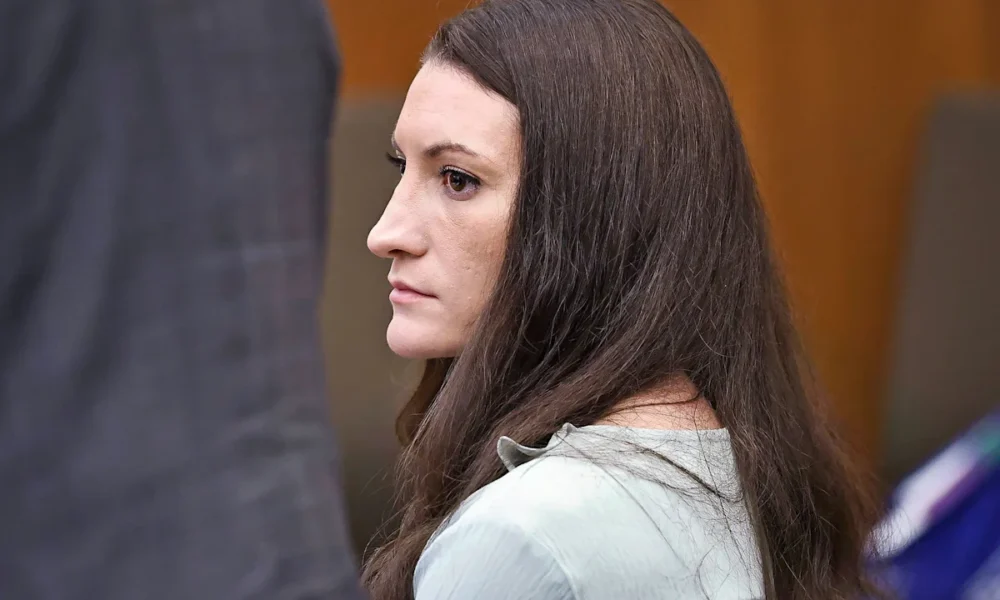
The Lindsay Clancy mistrial followed a deadlocked jury. Three jurors describe the disputed insanity defense, reasonable doubt, and the holdout’s position.
Lindsay Clancy Mistrial: What the Jurors Revealed
The Lindsay Clancy mistrial ended a closely watched Massachusetts case without a verdict. Three jurors now say the panel was divided over whether Clancy understood right from wrong when her three children died.
The interviews offer insight into the jury’s deliberations, but they do not establish that the holdout violated the judge’s instructions or acted improperly.
Why the Lindsay Clancy Trial Ended in a Mistrial
The trial ended after jurors spent more than 38 hours deliberating without reaching the unanimous decision required in a criminal case.
The panel reportedly consisted of nine women and three men. Court notes indicated that the jurors were divided 11 to 1 at one point. With no agreement possible, the judge declared a mistrial.
A mistrial means the proceeding ended without a final verdict. It does not determine whether the defendant is guilty or not guilty, and it does not necessarily end the case. Prosecutors may seek to try the case again, subject to further legal proceedings and any decisions by the court.
What the Jury Had to Decide
There was little dispute about whether Lindsay Clancy caused the deaths of her three children. According to the trial coverage, Clancy admitted that she fatally strangled them at the family’s home in Duxbury, Massachusetts, in January 2023.
The central question was her mental state at the time.
Clancy’s defense argued that she was suffering from severe postpartum psychosis and other serious mental-health conditions. Her attorneys contended that she should not be held criminally responsible because she could not understand the difference between right and wrong when the killings occurred.
That is different from simply arguing that a defendant was distressed or experiencing depression. The legal issue focused on whether Clancy’s mental condition prevented her from forming the level of understanding required for criminal responsibility.
The insanity defense was the central issue
Jurors were not asked only whether Clancy loved her children or whether she had been experiencing a mental-health crisis. They had to evaluate evidence and testimony connected to the legal standard for criminal responsibility.
Foreperson Roni Carlson said the jury was trying to determine whether Clancy understood right from wrong at the time of the killings.
That distinction became the dividing line in deliberations. Several jurors reportedly believed the evidence supported a finding that Clancy was not criminally responsible. One juror disagreed, and the panel could not reach a unanimous conclusion.
What Three Jurors Said About the Holdout
Carlson, Kellie Farina, and Paula Devlin discussed the deliberations in an interview with NBC10 Boston.
Carlson said the holdout juror acknowledged having reasonable doubt. She recalled beginning to complete the paperwork for a finding that Clancy was not guilty by reason of insanity. According to Carlson, the juror then said he still would not support that conclusion.
That account reflects one side of a confidential jury process. The holdout juror did not publicly respond, and the news report said attempts were made to contact him.
Jurors disagreed over how to interpret the evidence
Farina said the holdout appeared focused on the fact that Clancy had killed her children. She described the discussions as repeatedly returning to the judge’s legal instructions about reasonable doubt.
The disagreement appears to have involved more than one piece of evidence. Jurors considered Clancy’s journals, testimony from family members, medical information, and toxicology evidence presented during the trial.
Devlin said the holdout did not accept some information that other jurors—including nurses on the panel—believed was relevant to understanding the toxicology evidence.
Those comments describe the jurors’ impressions. They do not replace the trial record or establish how the judge would assess the panel’s internal disagreement.
Why Reasonable Doubt Mattered
In a criminal trial, the prosecution must prove its case beyond a reasonable doubt. If jurors have a reasonable doubt about an element that must be proven, the law does not permit them to convict simply because they find the underlying conduct disturbing.
The jurors’ comments suggest that the panel struggled to apply that legal framework to an emotionally devastating case.
Carlson said the panel was not trying to determine whether Clancy had killed the children. Instead, jurors were evaluating whether she understood the nature and wrongfulness of her actions at the time.
That distinction can be difficult for jurors in any mental-state case. The factual circumstances may be clear while the legal question remains contested.
The Evidence Jurors Said Stayed With Them
Farina described an emergency 911 call made by Clancy’s husband, Patrick, as one of the most difficult pieces of evidence to hear.
She said the audio was played again in the jury room and that some jurors used headphones rather than listen to it a second time. Farina described the call as emotionally overwhelming and said it was something she expected to remember.
The jurors also discussed evidence they believed showed Clancy loved her children. Carlson referred to Clancy’s journals and testimony from her mother-in-law as factors that influenced the panel’s understanding of her relationship with the children and her mental state.
That interpretation was part of the defense narrative. The prosecution’s case sought to persuade jurors that Clancy should be held criminally responsible under Massachusetts law.
What Happens After a Mistrial?
The Lindsay Clancy mistrial leaves the case unresolved. A prosecutor may ask to retry the charges, although the next steps depend on court rulings, scheduling, and decisions by both sides.
A second trial would not necessarily repeat every aspect of the first proceeding in the same way. The parties could challenge evidentiary rulings, seek additional instructions, or present arguments about testimony and expert evidence.
The defense could also continue to argue that Clancy’s mental illness prevented criminal responsibility. Prosecutors would continue to have the burden of proving the charges under the applicable legal standard.
Until another trial produces a verdict—or the case is otherwise resolved—Clancy remains legally entitled to the presumption of innocence.
What the Juror Interviews Do—and Do Not—Show
The interviews provide a rare glimpse into why the jury failed to reach a verdict. They show that the disagreement centered on mental state, reasonable doubt, and the legal meaning of criminal responsibility.
They do not establish that the holdout was legally wrong. Jurors can disagree about how evidence satisfies a legal standard, and a single juror’s refusal to agree can prevent a conviction or an acquittal when unanimity is required.
They also do not establish the outcome of any future proceeding. The public comments reflect the recollections of three jurors after a stressful and emotionally difficult trial.
The Case Remains Unresolved
The Lindsay Clancy mistrial closed the first trial without answering the central legal question: whether Clancy should be held criminally responsible for the deaths of her three children.
The jurors’ accounts indicate that most of the panel leaned toward a finding that she was not guilty by reason of insanity or lack of criminal responsibility. One juror remained unconvinced, and the disagreement prevented a unanimous verdict.
Any future development will depend on decisions by prosecutors, the defense, and the court. For now, the mistrial means the legal case remains open, and no final verdict has been entered.