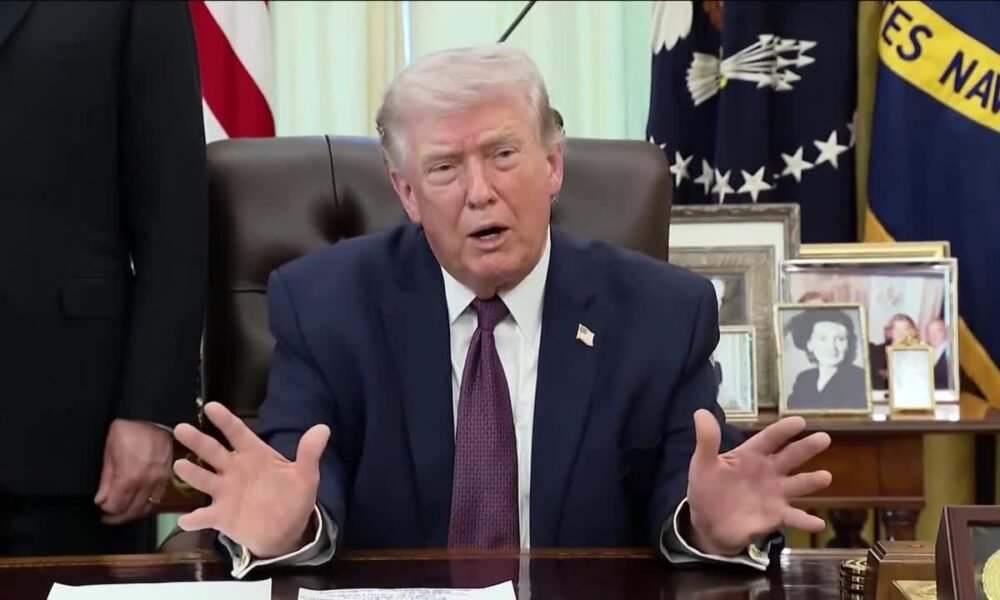
Mail-in voting restrictions are back before the Supreme Court as the Trump administration seeks to enforce new USPS ballot rules before the midterms.
Mail-In Voting Restrictions Return to the Supreme Court
The Trump administration has asked the U.S. Supreme Court to allow new mail-in voting restrictions to take effect before the November congressional elections.
The emergency filing came after a federal judge in Boston extended an order blocking the U.S. Postal Service from implementing the rules. The administration argues that the delay could create confusion as states begin mailing ballots to voters.
The Supreme Court’s decision could determine whether the restrictions apply during the 2026 midterm election.
What the Trump Administration Is Asking For
Solicitor General John Sauer, representing the administration, asked the Supreme Court to immediately lift the lower court’s injunction.
The filing followed an earlier emergency request by the administration. Before the Supreme Court ruled on that first application, U.S. District Judge Indira Talwani extended the order preventing the USPS rule from taking effect.
The latest filing represents another effort to revive the policy before more states distribute mail ballots.
Justice Ketanji Brown Jackson set Wednesday as the deadline for responses to the administration’s request. After those filings are submitted, the Supreme Court could decide whether the rule remains blocked or begins operating during the election cycle.
How the Proposed USPS Rule Would Work
The policy is based on an executive order President Donald Trump signed in March. It would impose additional requirements on states and voters who use mail ballots.
Under the rule:
- States would provide the Postal Service with lists of mail-ballot recipients.
- Outgoing and return ballot envelopes would need unique barcodes.
- USPS could refuse to deliver ballots that fail to meet the new standards.
- Ballots connected to voters who do not appear on state-provided lists could also face delivery problems.
The administration says the requirements would help standardize mail-ballot processing and prevent confusion. Opponents argue that the policy could interfere with ballots that states have already approved for delivery.
States Use Different Mail-Ballot Systems
Every state permits some form of voting by mail, but the rules vary.
Twenty-nine states allow voters to request a mail ballot without providing a specific reason. Eight states conduct elections entirely by mail, meaning the proposed federal requirements could affect a large number of voters and election administrators.
North Carolina became the first state to mail ballots for the November elections on Friday. That timing has increased the urgency of the legal dispute.
Why the Timing Matters
The administration says the lower court’s order should be lifted quickly because states are already preparing ballots.
Sauer warned that every day the injunction remains in place could increase the risk of “confusion and chaos” as election officials send ballots to voters. The administration’s argument centers on the need for a uniform standard before the election process advances further.
Opponents of the policy face a different concern: changing mail-ballot procedures after states have begun preparing elections could itself create uncertainty.
Election administrators typically need time to update ballot instructions, printing systems, voter databases, and delivery procedures. A last-minute ruling could force states to change their processes while ballots are already being mailed.
The Broader Political Dispute
Trump has supported restrictions on mail voting for years. He has also continued to repeat false claims that widespread fraud caused his defeat in the 2020 presidential election.
Those claims have helped make mail voting a major political issue among Republican voters. Democrats and voting-rights advocates generally argue that mail ballots are an established part of American elections and that new federal barriers could make voting more difficult.
The current case places the Supreme Court at the center of that dispute. The justices are being asked to decide whether the administration can enforce the USPS rule while the broader legal challenge continues.
What the Supreme Court Could Decide
The court could take several possible approaches:
- Allow the rule to take effect immediately. This would let USPS begin enforcing the new standards before the midterms.
- Keep the lower court’s injunction in place. The restrictions would remain blocked while the lawsuit proceeds.
- Issue a narrower order. The justices could allow parts of the policy to move forward while limiting other provisions.
- Request additional legal briefing. That could delay a final decision and leave election officials waiting for clearer guidance.
The court’s action may have practical consequences for voters, state election offices, and postal workers across the country.
What Happens Next?
Responses to the administration’s application are due Wednesday. The Supreme Court will then determine whether the USPS rule can be enforced before the November 3 congressional elections.
Until the justices issue a decision, states and voters will continue operating under existing mail-voting procedures. Election officials may need to prepare for multiple outcomes, particularly if the court acts close to the start of widespread ballot distribution.
The case could ultimately shape how federal agencies regulate election mail—and how much authority the executive branch has to change voting procedures nationwide.