Health
Mouth Taping Danger: 5 Risks Sleep Experts Warn About
Mouth taping may worsen breathing problems, especially with sleep apnea. Learn what research found, why experts urge caution, and safer next steps.
Mouth taping has become a popular sleep trend, with influencers claiming it can reduce snoring, improve sleep, and encourage nasal breathing. But an expert review found little evidence of meaningful benefits—and warned that the practice may be unsafe for people with breathing problems.
For anyone wondering about the mouth taping danger, the most important step is identifying why nighttime breathing is difficult in the first place.
Contents
- 1. What Is Mouth Taping?
- 2. Why Experts Are Concerned About Mouth Taping
- 3. Mouth Taping and Sleep Apnea
- 4. What Research Says About the Trend
- 5. Could Mouth Taping Worsen Breathing?
- 6. Should Everyone Avoid Mouth Taping?
- 7. Safer Next Steps for Nighttime Breathing Problems
- 8. The Bottom Line on Mouth Taping
What Is Mouth Taping?
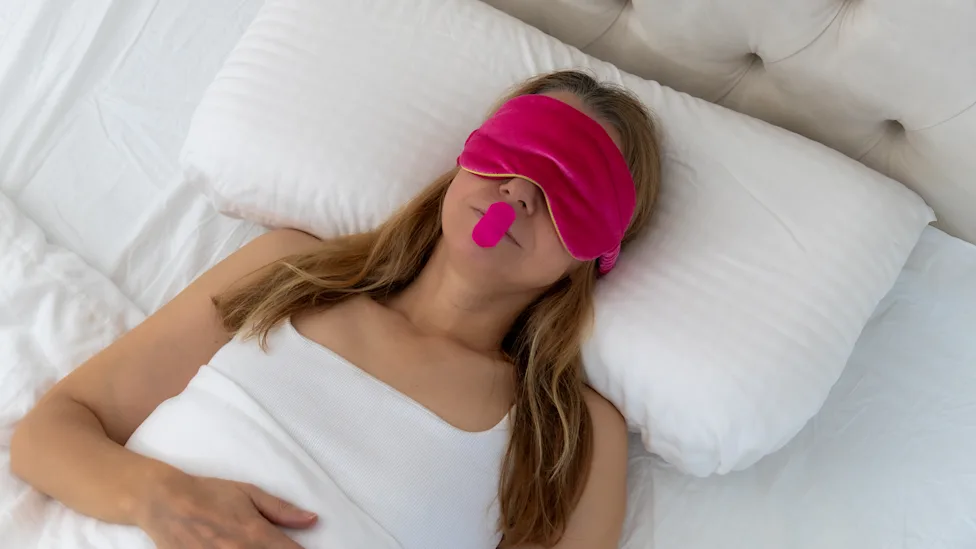
Mouth taping involves placing a strip of tape or an adhesive patch over the lips before going to sleep. Supporters say the method encourages people to breathe through their noses instead of their mouths.
Nasal breathing can warm and humidify incoming air. Some people also believe it may reduce snoring or improve sleep quality. However, those potential benefits are not firmly established, and taping the mouth does not address the underlying causes of nighttime breathing problems.
The method has received attention from celebrities and influencers, including Gwyneth Paltrow, Ashley Graham, and Emma Roberts. Their personal experiences helped make mouth taping a viral wellness practice, but individual testimonials are not the same as clinical evidence.
Why Experts Are Concerned About Mouth Taping
Dr. Brian Rotenberg, an otolaryngologist and sleep surgeon in Ontario, Canada, said people should not assume that mouth breathing is harmless or easily corrected with tape.
A blocked or restricted nose may have an underlying cause. Possibilities can include:
- A deviated septum
- Nasal polyps
- Chronic congestion
- Enlarged tissues
- Allergies
- Other structural or medical conditions
Covering the mouth may conceal the symptom without treating the problem. In rare cases, a person may have a more serious condition that requires assessment by a qualified health professional.
Rotenberg compared the practice to buying glasses without determining why someone’s vision is deteriorating. The immediate symptom may appear manageable, but the underlying cause could require proper diagnosis.
Mouth Taping and Sleep Apnea
The greatest mouth taping danger may involve people with undiagnosed or untreated sleep apnea.
Obstructive sleep apnea occurs when the upper airway repeatedly narrows or collapses during sleep. Breathing can stop and restart many times during the night, often without the person realizing it.
Rotenberg said mouth taping is not an appropriate treatment for people with sleep apnea. If the throat is collapsing and the nose is blocked, sealing the mouth can further restrict the available route for airflow.
The article’s expert cited estimates indicating that roughly 9% of men and 3% to 4% of women have sleep apnea without knowing it. That means some people may try mouth taping before realizing they have a condition that needs medical evaluation.
What Research Says About the Trend
Rotenberg and colleagues reviewed 86 existing studies about mouth taping and related approaches. They examined 10 studies in greater detail.
Eight of those studies found no clear benefit. Two suggested minimal benefits.
The review does not prove that mouth taping is harmful for every person in every circumstance. It does show that the evidence supporting broad health claims is weak, particularly when the method is promoted as a treatment for sleep-disordered breathing.
That distinction matters. A product may be acceptable for a narrow group under professional guidance while still being unsuitable as a general home remedy.
Could Mouth Taping Worsen Breathing?
Potential problems depend on a person’s health, nasal airflow, sleep position, and the cause of their breathing difficulty. Someone with congestion, nasal obstruction, or sleep apnea may have trouble getting enough air after the mouth is covered.
Other practical concerns may include:
- Increased anxiety or a feeling of suffocation
- Difficulty removing the adhesive quickly
- Skin irritation or allergic reactions
- Disturbed sleep
- Delayed diagnosis of an underlying condition
- Worsening symptoms in people with airway obstruction
People should be especially cautious if they already experience loud snoring, gasping during sleep, morning headaches, excessive daytime fatigue, or witnessed pauses in breathing.
Should Everyone Avoid Mouth Taping?
Rotenberg did not argue that mouth taping must be banned in every situation. He said some people might tolerate or potentially benefit from it if they have no nasal obstruction or other breathing disorder.
Even so, he recommended evaluation before treating nighttime breathing problems with tape. A primary-care clinician, ear, nose, and throat specialist, or nurse practitioner can help determine whether congestion, anatomy, allergies, or sleep apnea may be involved.
The issue is not whether an influencer felt better after using mouth tape. The issue is whether the person using it has a condition that makes restricted airflow risky.
Safer Next Steps for Nighttime Breathing Problems
People who snore or wake with a dry mouth should focus on finding the cause rather than immediately covering their lips.
Useful next steps include:
- Make an appointment with a qualified health professional.
- Ask whether symptoms suggest sleep apnea or another sleep-related breathing disorder.
- Discuss persistent nasal congestion, allergies, or suspected structural problems.
- Consider a sleep evaluation if someone notices gasping, choking, or breathing pauses.
- Follow evidence-based treatment recommendations rather than relying on social-media testimonials.
- Stop using mouth tape if it causes breathing difficulty, panic, skin reactions, or disrupted sleep.
A clinician may recommend treatments based on the diagnosis. Those options can differ widely, which is why the same product should not be treated as a universal solution.
The Bottom Line on Mouth Taping
Mouth taping may seem like a simple way to encourage nasal breathing, but the evidence for its benefits remains limited. The practice is particularly concerning for people with sleep apnea, nasal obstruction, or unexplained nighttime breathing problems.
The safest approach is to investigate the symptom before trying to suppress it. If breathing is difficult during sleep, a proper diagnosis is more useful—and potentially safer—than a viral wellness remedy.