Business
Nvidia Q2 Earnings: 5 Powerful Takeaways for Investors
Nvidia Q2 earnings beat forecasts, while a strong outlook signals continued AI demand. Here are five key results, risks, and market takeaways.
Contents
- 1. Nvidia Q2 Earnings: 5 Powerful Takeaways for Investors
- 1.1. Nvidia Q2 Earnings Beat Expectations
- 1.2. Q3 Guidance Points to More Rapid Growth
- 1.3. Data Center Revenue Remains the Main Growth Engine
- 1.4. Other Businesses Also Exceeded Forecasts
- 1.5. Jensen Huang Says AI Has Reached a Turning Point
- 1.6. Hyperscaler Dependence Creates a Long-Term Risk
- 1.7. New Financing and Infrastructure Deals Expand Nvidia’s Reach
- 1.8. What Investors Should Watch Next
Nvidia Q2 Earnings: 5 Powerful Takeaways for Investors
Nvidia’s latest quarter delivered another major test of the artificial-intelligence boom—and the chipmaker passed it. Revenue and adjusted earnings exceeded Wall Street expectations, while management projected another quarter of rapid growth.
The results may reassure investors who have questioned whether enormous AI infrastructure spending can produce lasting returns. They also highlight a growing challenge: Nvidia remains heavily dependent on a small group of powerful customers that are increasingly developing chips of their own.
Nvidia Q2 Earnings Beat Expectations
Nvidia reported adjusted earnings per share of $2.22 for the second quarter, ahead of the $2.09 analysts had expected. Revenue reached $96.2 billion, compared with the roughly $92.3 billion forecast by Wall Street.
That performance shows the company is still converting intense demand for AI processors into substantial sales. Nvidia’s chips are used to train and operate large language models, generative AI services, recommendation engines, autonomous systems, and other data-intensive applications.
The size of the quarterly revenue figure is particularly notable because Nvidia’s business has expanded far beyond traditional graphics processing. Data-center products now represent the company’s financial center of gravity, with cloud providers and enterprise customers competing for access to advanced computing capacity.
Investors initially sent Nvidia shares lower after the announcement, suggesting that expectations were already extremely high. The stock later rose more than 7% in premarket trading, indicating that the company’s outlook ultimately outweighed the initial hesitation.
Q3 Guidance Points to More Rapid Growth
Nvidia expects third-quarter revenue to fall between $105.8 billion and $110.1 billion. That range suggests the company expects sales to keep accelerating rather than settle into a slower-growth phase.
Strong guidance matters because Nvidia’s valuation depends heavily on future earnings, not just on the quarter that has already ended. A forecast near or above $110 billion would represent another significant step up from the $96.2 billion reported for Q2.
The outlook also suggests that major technology companies continue to spend aggressively on data centers, networking equipment, and AI accelerators. These investments support services such as cloud computing, search, digital advertising, productivity software, and enterprise automation.
Still, guidance is not a guarantee. Nvidia’s results depend on customers receiving data-center capacity, obtaining enough electricity, completing construction projects, and turning AI investments into profitable products. Delays in any of those areas could affect future orders.
Data Center Revenue Remains the Main Growth Engine
Nvidia’s data-center division generated $89 billion in Q2 revenue, exceeding the expected $85.8 billion. The segment includes sales to hyperscale cloud providers, AI-focused cloud companies, industrial customers, and enterprise clients.
This figure represents the clearest measure of the current AI infrastructure cycle. Hyperscalers such as Amazon, Google, and Microsoft purchase large quantities of Nvidia hardware to support their own services and rent computing capacity to other businesses.
According to quarterly commentary from Nvidia Chief Financial Officer Colette Kress, hyperscale revenue more than doubled from the previous year. Revenue from the company’s industrial and enterprise category increased 138%.
Those gains show that demand is spreading beyond a handful of consumer-facing AI applications. Businesses are also purchasing infrastructure for cybersecurity, drug discovery, robotics, financial modeling, manufacturing, and data analysis.
The company’s strategy increasingly combines processors, networking equipment, software, and complete data-center systems. That approach can raise the value of each customer deployment and make Nvidia more central to the design of modern AI facilities.
Other Businesses Also Exceeded Forecasts
Nvidia’s businesses outside the core data-center operation generated $7.2 billion in Q2 revenue, above the $6.6 billion analysts had projected.
This category includes gaming and newer areas such as physical AI. Gaming remains tied to demand for graphics cards and related products, while physical AI refers to systems that interact with the real world, including robots, industrial machines, and autonomous platforms.
Although these businesses are much smaller than data-center operations, they provide Nvidia with additional sources of revenue. They may also create future growth opportunities if AI-enabled devices become more common in factories, warehouses, vehicles, and consumer products.
For investors, the key point is balance. Nvidia’s financial performance is currently dominated by AI infrastructure, but the company is not relying on only one product category. Even so, the scale of data-center revenue means that this segment will continue to determine the company’s near-term results.
Jensen Huang Says AI Has Reached a Turning Point
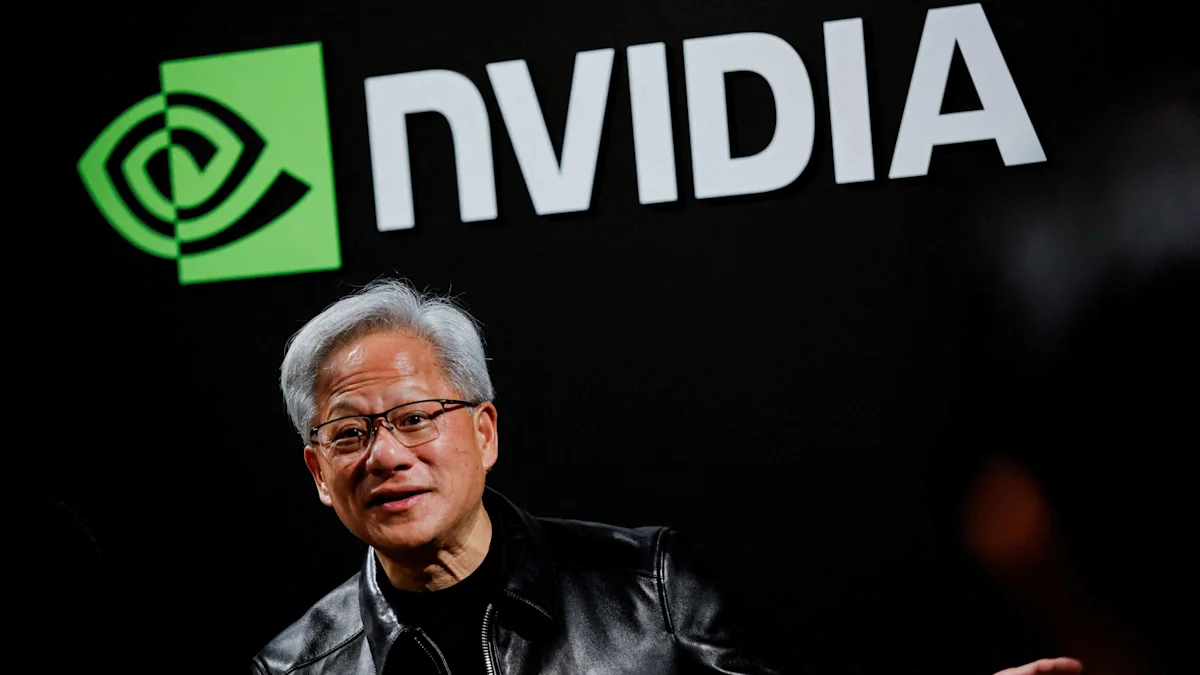
Nvidia CEO Jensen Huang described AI as having reached an “inflection point,” arguing that AI systems are now doing useful work and generating economic value.
That message reflects a broader shift in the technology industry. Early AI investment focused heavily on research, model training, and experimentation. Companies are now trying to deploy AI tools at scale and connect them to measurable revenue, productivity gains, and customer demand.
Huang also pointed to growth among AI startups, research laboratories, open-model developers, and physical-AI companies. Nvidia’s opportunity expands as more organizations build their own models or use existing models in specialized applications.
The company’s Vera Rubin platform, described as being in full production, is designed to support this next phase of AI infrastructure. Hardware platforms of this kind combine advanced computing with networking and system-level architecture, helping customers build larger and more efficient data centers.
The investment case depends on whether this expansion continues. If AI applications become increasingly useful and profitable, demand for computing could remain strong. If companies struggle to monetize their systems, spending could eventually slow.
Hyperscaler Dependence Creates a Long-Term Risk
Nvidia’s biggest customers are also among its most important competitors. Amazon, Google, and Microsoft buy Nvidia chips, but each is working to reduce dependence on outside suppliers by designing custom processors.
Custom chips can be tailored to specific workloads and may help cloud companies manage costs, energy use, and supply. Some of these companies also offer their processors to outside customers, creating another competitive pressure for Nvidia.
That does not necessarily threaten Nvidia’s position immediately. Developing a competitive AI accelerator requires specialized engineering, software support, manufacturing capacity, and a broad ecosystem of developers. Nvidia’s CUDA software platform and established customer relationships remain significant advantages.
However, investors should watch the customer mix over time. If the largest cloud providers increasingly shift workloads to internally designed chips, Nvidia could face slower growth, pricing pressure, or changes in product demand.
This is one reason strong quarterly results do not eliminate every concern surrounding the stock. Nvidia can continue reporting record revenue while facing a more competitive market several years from now.
New Financing and Infrastructure Deals Expand Nvidia’s Reach
Nvidia is also working with major financial firms, including BlackRock, Blackstone, KKR, Apollo, Brookfield, and Goldman Sachs, on a proposed $500 billion pool of capital linked to AI infrastructure.
The goal is to help finance the construction and expansion of data centers that require enormous amounts of computing equipment, electricity, land, and network capacity. More available capital could help customers move projects forward faster.
The company has also backed efforts by SB Energy and OpenAI to develop a large data center in Ohio. The project is expected to involve up to 8 gigawatts of capacity and as much as $150 billion in investment.
Projects of that scale illustrate both the opportunity and the difficulty of the AI build-out. They could create substantial demand for Nvidia’s processors, but they also require long permitting timelines, power agreements, financing, and construction work.
What Investors Should Watch Next
Nvidia’s Q2 earnings reinforce the company’s leadership in AI computing, but the next stage will require more than headline revenue growth. Investors should focus on several measurable issues:
- Whether Q3 revenue reaches the upper end of management’s forecast
- The pace of hyperscaler spending
- Demand from enterprise and industrial customers
- The rollout of new processor platforms
- Competition from custom chips developed by major cloud providers
- Evidence that AI customers are generating returns on their infrastructure investments
- The effect of data-center power and construction constraints
The strongest signal from the quarter is that demand remains substantial. The biggest question is whether that demand can stay profitable as customers become more selective and competition intensifies.
For now, Nvidia’s results show a company still operating at the center of the AI infrastructure cycle. Its earnings exceeded expectations, its outlook remained aggressive, and its data-center business continued to expand at an exceptional pace. The stock may remain volatile, but the latest Nvidia Q2 earnings report gives investors a strong reason to keep the company at the center of the technology discussion.