News
Australia pledges to help keep Strait of Hormuz open if deal is reached
Australia will be part of the large-scale peacekeeping operation to protect the Strait of Hormuz if and when an agreement is reached.
The details will be discussed in London later this week, with further military deployment possible.
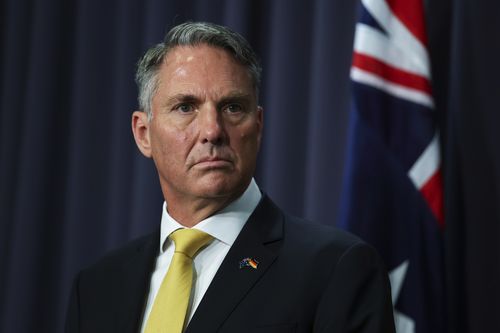
Defense Minister Richard Marles said Australia was working with international partners including Britain, France and the US, but declined to “speculate” about what assistance the country would provide.
“Look, there has been no specific request for any Australian capacity. Obviously we will help,” he told ABC’s Insiders.
“The Strait of Hormuz is important to Australia. It matters that it is open, and it matters that we see the global fuel supply chain returning to normal.”
Enforcing the law in international waters will be an international effort and different from traditional peacekeeping missions.
The opposition is already on board.
“We must intervene in this dispute and ensure these tankers can navigate safely,” said former Nationals leader David Littleproud.
But a ceasefire seems difficult to achieve and what that ceasefire will look like is impossible to predict.
An alliance of 49 countries led by Great Britain and France is preparing a peace mission.
“This really matters for all countries because it affects all our countries,” said British Prime Minister Keir Starmer.
Australia and China are among them, but America is not.
Liberal Senator Jonno Duniam said Iran should not leave the rest of the world to chance.
“If a request is made, I think it is in our interest to support any plan to open the Straight Line of Hormuz,” he said.
That request will be discussed at a meeting in London this week.
With Australia’s E7 Wedgetail early warning and surveillance aircraft already in the region, expanding its deployment to monitor the straits is the most likely outcome
“We have a very important platform that is currently in the region – which is currently being optimized for the defense of the Gulf states,” Marles said.
When the strait was first opened, the price of oil suddenly dropped.
The hope is that a permanent opening will eventually cause prices to drop permanently, but that is no guarantee.
Defense Secretary Pat Conroy said it was a challenging period.
“If the conflict continues it will become more challenging, which is why we are working hard with our international partners,” he told Sky News. Sunday Agenda.