
News
Man attacked by ‘large crocodile’ at popular camping spot north of Broome
The man was reportedly bitten on April 18 on a beach next to Hidden Creek, north of the Coulomb Point Nature Reserve in the Kimberley.
It is believed the man, in his 20s, was asleep when the attack happened in the early hours of the morning.

He was taken to Broome Hospital in a stable condition, according to WA’s Country Health Service, and was later flown by the Royal Flying Doctor Service to Jandakot in Perth yesterday afternoon.
From there he was taken by ambulance in a stable condition to Royal Perth Hospital where he is currently undergoing surgery for his injuries.
Western Australia’s Department of Biodiversity, Conservation and Attractions (DBCA) yesterday confirmed it had been informed of the attack involving “a large crocodile”, about 50km north of Broome.
“Parks and Wildlife Service staff have already spoken to a family member of the man who was attacked and plan to discuss the incident further with those involved,” a DBCA spokesperson said.
The attack has prompted a warning from the department to be vigilant when camping in “Croc Country.”
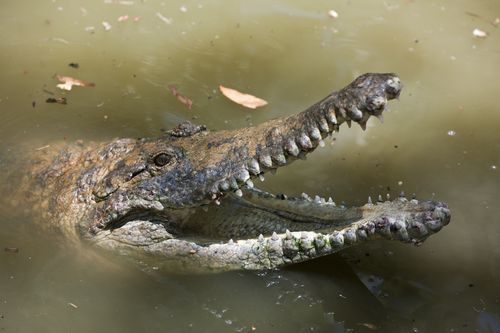
“Saltwater crocodiles are found throughout the Kimberley and are active all year round,” said DBCA’s Parks and Wildlife Service WA.
“Take extra care when choosing a camping spot and spend time near the water.
“Visitors are advised to camp at least 50 meters from the water’s edge and keep children and pets well away from the shoreline.”
DBCA said it would conduct a site visit as part of the investigation.
“Crocodiles are common in the Kimberley and people should always BE CROCWISE anywhere along the Kimberley coast and all water bodies in northern Australia, including estuaries, tidal rivers, river pools and the waters around offshore islands,” the spokesperson said.
“Your safety is your responsibility.”
The department urged the community to contact the nearest Parks and Wildlife Service office to report crocodiles that pose a risk to public safety by being aggressive or approaching people.
NEVER MISS A STORY: Be the first to receive your latest news and exclusive stories by following us on all platforms.