News
‘Australians are poorer’ and ‘everything is moving in the wrong direction’
And if the war in the Middle East were to drag on longer than expected, there are some signs that any light found could soon reveal itself like a train hurtling straight for the hips of Australians.
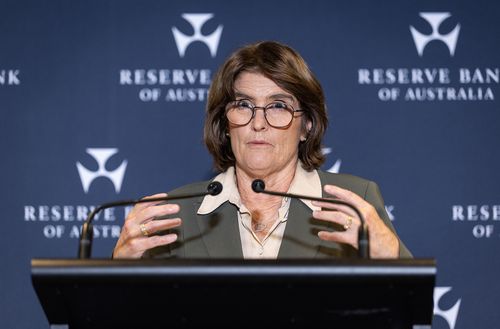
Bullock didn’t hesitate in blaming “this war on the other side of the world” for much of the inflationary pressures that forced the central bank to make an 8-1 decision to raise the cash rate to 4.35 percent, a return to post-pandemic highs.
“It’s a real income shock for Australia and the world,” she said at a news conference after Tuesday’s decision.
“Australians are poorer because of this shock to oil and energy prices and all other commodity prices affected.
“So we’re poorer, and there’s no way out. The tradeoff is much worse.”
A quick look at the numbers underlying the bank’s reasoning explains some of the doom and gloom.
The RBA board’s Statement on Monetary Policy predicts that growth will fall to an ‘anemic’ 1.3 percent by the end of the year and essentially remain there until mid-2028, while the unemployment rate slowly heads towards 5 percent.
Yet it still decided to hit mortgage holders with the only blunt instrument at its disposal to tackle inflation. She now expects this to be 4.8 percent in June, 0.6 percentage points higher than pre-war predictions.
Harry Murphy Cruise, head of economic research and global trade at Oxford Economics, said the forecast “sometimes produces gloomy numbers” and left the RBA “little choice but to increase today”.
“Inflation and unemployment are expected to reach higher peaks, while spending, investment and overall GDP growth will be weaker,” he said.
“Essentially, everything is going in the wrong direction.”

The bad news doesn’t stop there. Cash rates are expected to reach 4.7 percent in December and more or less stay there.
All these predictions are based on the bank’s ‘basic’ assumption that the war will ‘end soon’, that the ‘Strait of Hormuz will be reopened soon’ and that shipping will return to normal by the end of the year.
But that’s just a prediction. The words “uncertain” or “uncertainty” appear 48 times in the document.
The RBA has also modeled two worse scenarios, based on a longer closure of the strait and potential damage to energy infrastructure, which would cause energy prices to rise higher than expected. GDP could be 0.8 percent lower than the base case and both inflation and unemployment above 5 percent.
“The longer the strait remains closed, the fewer options the board will have; a prolonged closure would force the RBA to raise rates several times this year to tame inflation and inflation expectations,” Murphy Cruise said.
Although Bullock was quick to acknowledge the impact the war had already had and would likely continue to have, he emphasized that this was “not the only reason.”
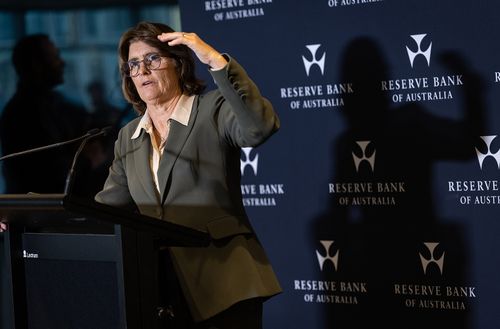
“We had an inflation problem before this,” she said.
‘People often say to me… you have to have something better than the interest rate. We don’t have that. It’s all we have, and we know it affects different people in different ways.
“We know that, but it’s the only thing we have to address inflation, and the key point in that comment was about the rising costs of all those things. That’s why we must prevent this from happening.
“We need to stop inflation because yes, mortgage costs are hurting them, but it’s all these other things that are hurting people, the increase in grocery prices, the increase in fuel prices, all those kinds of things are hurting people.”
Some analysts, such as Westpac chief economist Luci Ellis, even think the RBA is too optimistic when it comes to inflation risk.
“Our own assessment, however, is that there will be slightly more inflation in the near term, both from a higher oil price than future markets imply, and from a larger, longer-lasting second-stage pass-through to other prices, especially in the cost of housing construction,” she wrote.
She also expressed her surprise. Bullock appeared to give the green light to companies to pass on higher fuel and fertilizer costs to customers.
“This was in contrast to the discussion during the media conference about avoiding pass-through on wages,” she said.
“At several points, the governor emphasized that the energy price shock is ‘making us all poorer’ and that there was nothing that could be done about it.
“In our view, it would have been more helpful to the RBA’s own inflation fight if the governor had encouraged companies with the capacity to absorb these cost increases to do so.”
The governor also had a message for Treasurer Jim Chalmers, in case he’s thinking about dipping his hand into the coffers of next week’s federal budget to help families struggling to make gas and mortgage payments.
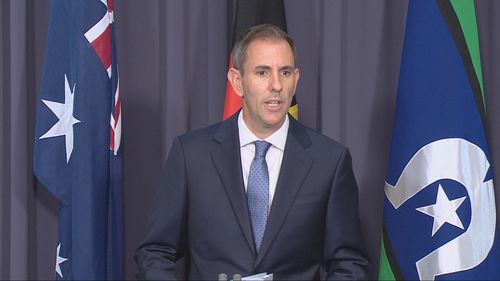
“All I’m saying is that the extent to which the government makes up for household shortfalls by giving them more money makes it harder to dampen demand,” Bullock said.
Chalmers said his budget next week, which will focus on savings rather than spending, will help reduce inflation.
“We intend to play a useful role, and not a harmful role, in the fight against inflation,” he said
NEVER MISS A STORY: Be the first to receive your latest news and exclusive stories by following us on all platforms.