News
Congo curtails funeral wakes in Ebola outbreak

Authorities in northeastern Congo on Friday banned funeral wakes and gatherings of more than 50 people in an effort to contain a fast-spreading Ebola outbreak in a region where medical workers are struggling with a lack of resources and opposition from angry residents.
The World Health Organization said the outbreak now poses a “very high” risk to Congo – compared to a previous categorization of “high” – but that the risk of the disease spreading globally remains low.
WHO Director-General Tedros Adhanom Ghebreyesus said 82 cases and seven deaths had been confirmed in Congo but the outbreak was believed to be “much bigger”.

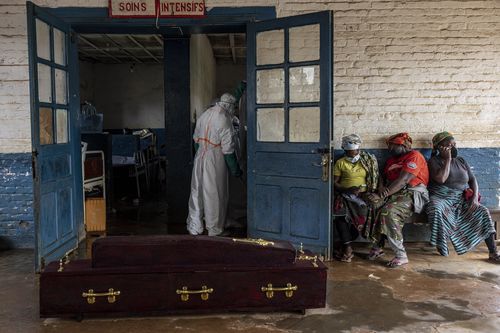
There is no vaccine available against the Bundibugyo virus, which spread undetected in Congo’s Ituri province for weeks after the first known death, while authorities tested for another, more common Ebola virus and came up negative.
There are now 750 suspected cases and 177 suspected deaths, although more are expected as surveillance expands.
“We are trying to catch up,” Congolese Foreign Minister Thérèse Kayikomenba Wagner told the AP. “It’s a race against time.”
Efforts are being stepped up in Ituri province
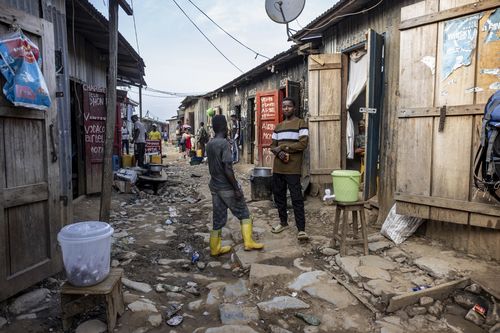
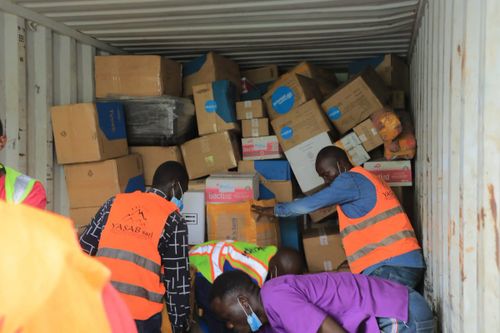
Supplies were rushed to Ituri in the country’s northeastern corner, where nearly a million people have been displaced by armed conflict over mineral resources. Ramping up contact tracing is a priority, Kayikomenba Wagner said.
In the provincial capital Bunia, AP reporters saw empty emergency treatment centers and doctors in the nearby town of Bambu using expired medical masks while suspecting they were Ebola patients.
The provincial government said Friday it is temporarily banning vigils and gatherings of more than 50 people.
It said funerals must be conducted in strict accordance with health protocols.
Authorities also required journalists to obtain permits to report on the outbreak, hampering their work.
Diseases spread in rebel-held areas
The disease has also been reported in two Congolese provinces south of Ituri – North Kivu and South Kivu, where the Rwanda-backed rebel group M23 controls many key cities, including Goma and Bukavu, where the rebels reported two cases.
The group said Friday it was creating a crisis team to combat the outbreak.
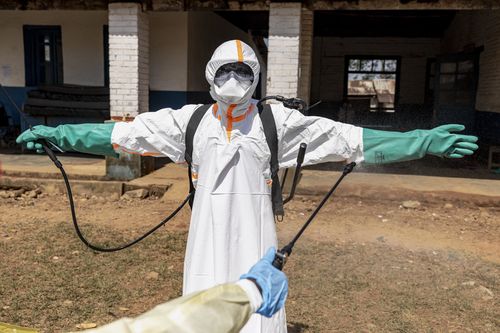
Kayikomenba Wagner said having the disease in rebel-held areas was alarming because “M23, despite whatever ambitions they may have, are thoroughly ill-equipped” to fight the disease.
She said the Congolese government and rebels were not communicating about the outbreak.
Response conflicts with local customs
Efforts by health officials and aid groups have met with pushback from communities due to misinformation or situations where medical policies have clashed with local customs, such as funeral rites.
On Thursday, an Ebola treatment center in Rwampara was set on fire by youths who were angry when they were prevented from collecting the body of a friend who apparently died of Ebola, witnesses and police said.
The dangerous work of burying suspected victims is managed by authorities wherever possible because the bodies can be highly contagious and lead to further spread when prepared for burial or when people gather for funerals.
Julienne Lusenge, president of Women’s Solidarity for Inclusive Peace and Development, a local aid group, said the public’s anger is mainly due to misinformation.
“We went through years and years of conflict and hardship, so rumors spread easily,” she said.
She said some churches have told their congregations that the outbreak is fake and that divine protection makes medical care unnecessary.
Sadness and the lack of a proper farewell
In the mining town of Mongbwalu in Ituri province, where the outbreak is believed to have originated, Lokana Moro Faustin lost his 16-year-old daughter to the disease and lamented not being able to say goodbye to her properly due to Ebola restrictions.
“At first we thought it was malaria. But then came vomiting, high fever, nosebleeds and bloody diarrhea,” he said sadly.
The teenager died on May 15 and her body was recovered from the hospital by specialist teams and taken directly to the cemetery for a safe burial.
Faustin was unable to say goodbye because he was in self-isolation, and it hurt him that his daughter was buried by people who were not family.
In Bunia, box workshop manager Christian Djakisa said demand has soared since the outbreak began. “We’re here every hour making coffins,” he said.
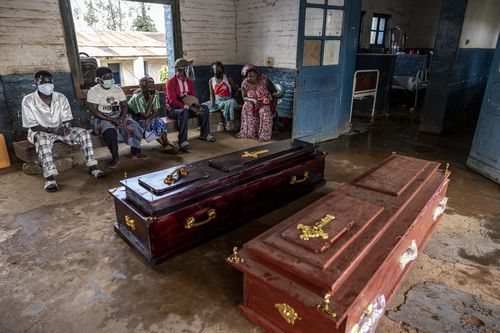
Aid is being flown in, but frontline staff have no resources
The United Nations said Friday it has released $84 million from its Central Emergency Response Fund to speed up the response in Congo and the region.
The US has pledged $32 million in funding to strengthen the response in Congo and Uganda, and said it would also fund the creation of up to 50 Ebola treatment clinics in the affected regions.
Lusenge said her group’s small hospital near Bunia lacks basic protective equipment, exposing nurses and doctors to possible infections, she said.
“We only have hand sanitizer and a few masks for the nurses, but we need much more than that,” Lusenge said.
Public health officials say a person infected with Ebola typically passes the virus to one to two other people — which is less contagious than measles, whooping cough and chickenpox, where one person can infect about a dozen others.
But researchers note that transmission rates have varied during previous Ebola outbreaks, and they are still trying to determine how contagious the Bundibugyo virus is.
The outbreak is larger than official figures indicate, the WHO says
Both the WHO and the Africa Centers for Disease Control and Prevention believe the outbreak is larger than the cases reported so far.
The region’s already weak healthcare infrastructure and surveillance capacity have been further weakened by cuts in international aid, experts say.
The International Rescue Committee said it had to halt its surveillance activities in three of five areas in Ituri over the past year due to budget cuts.
The armed conflict in the region further complicates efforts to tackle the crisis. To get from Bunia to Mongbwalu, aid groups must brace for possible attacks from armed groups.
“The outbreak can still be contained, but the space for action is narrow,” Gabriela Arenas of the International Federation of Red Cross and Red Crescent Societies said on Friday.