News
Donald Trump Strait of Hormuz blockade begins
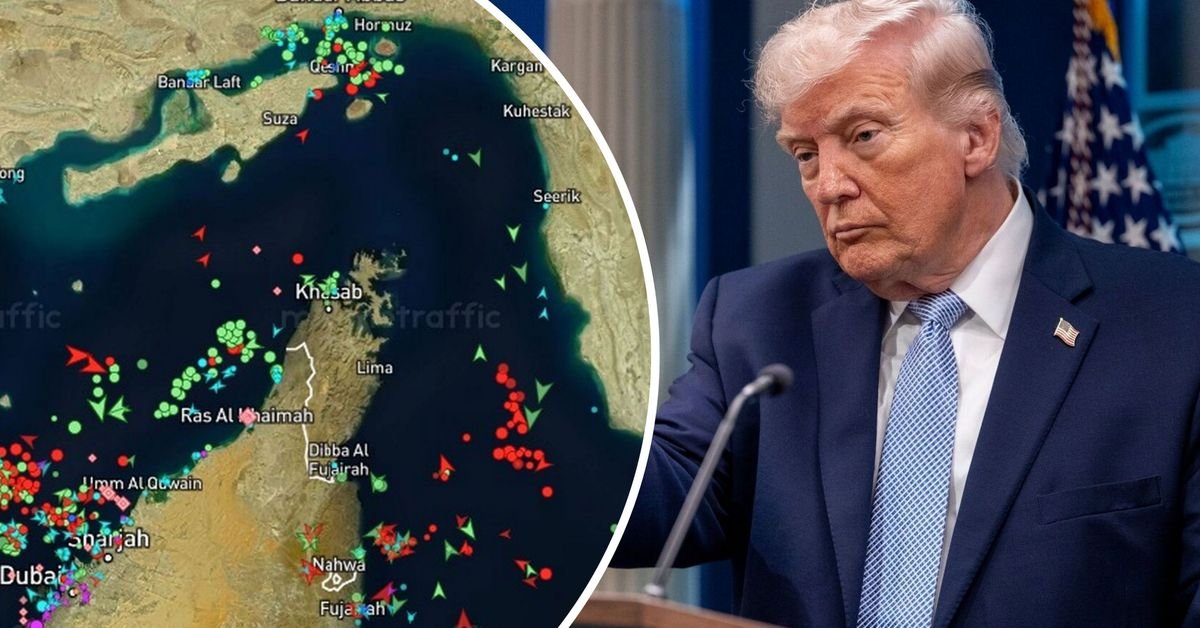
The US naval blockade of all Iranian ports has come into effect as part of efforts to force Tehran to agree to open the crucial Strait of Hormuz and accept a peace deal.
The US military’s Central Command announced that starting at 10 a.m. EDT on Monday (midnight Tuesday AEST), the blockade would be enforced “against ships of all countries entering or leaving Iranian ports and coastal areas,” including all Iranian ports on the Persian Gulf and the Gulf of Oman.
Iran responded with threats against all ports in the two gulfs, targeting US-allied countries.
It sets the stage for an extraordinary showdown that poses serious risks to the global economy and raises the specter that a ceasefire currently in place could collapse and war could resume.
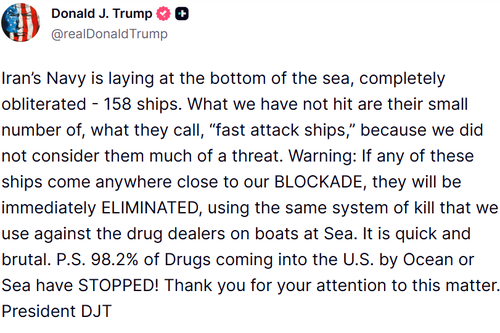
Trump posted on Truth Social shortly after the blockade went into effect, warning that if Iranian “fast attack ships” approached the blockade, they would be “immediately eliminated.”
“Effective immediately, the United States Navy, the best in the world, will begin blocking all ships attempting to enter or leave the Strait of Hormuz,” Trump announced on Truth Social.
“At some point we will reach a base of ‘ALL ARE ALLOWED TO ENTER, ALL ARE ALLOWED TO EXIT’, but Iran has not allowed that by just saying, ‘There could be a mine out there somewhere,’ which no one knows about except them.”
The US Central Command said it would still allow ships traveling between non-Iranian ports to transit the Strait of Hormuz, but details on how this would be orchestrated have yet to be shared.
“The blockade will be enforced impartially against ships of all countries entering or leaving Iranian ports and coastal areas, including all Iranian ports on the Arabian Gulf and the Gulf of Oman,” CENTCOM said in an X post.
The president said he has ordered the US Navy to ban any ship in international waters that has paid an “illegal” toll to Iran.
“No one who pays illegal tolls will have safe passage on the high seas,” he added.
Iran responded with threats of its own.
“Security in the Persian Gulf and the Sea of Oman is for everyone or NO ONE,” the Islamic Republic of Iran Broadcasting reported on Monday.
“No port in the region will be safe,” said a statement from the Iranian military and Revolutionary Guards.
Trump has claimed that “other countries” will be involved in the blockade and that the US military was “locked and loaded” to resume attacks on Iran.
“Any Iranian who shoots at us or at peaceful ships will be blown to hell!” he said.
Prime Minister Anthony Albanese said Australia had not been asked to join the US blockade.
“We have not been asked to participate. We have not received any requests that we have not agreed to,” he said Today this morning.
He described the Trump administration as a “unilateral blockade.”
Trump has also claimed that the US had completely destroyed naval mines in the strait
“Our military will finish off what little is left of Iran!” he wrote on Truth Social.
He again urged Iran to open the Strait before the looming deadline
“As they promised, they better start the process of getting this INTERNATIONAL WATERWAY OPEN AND FAST!” he added.
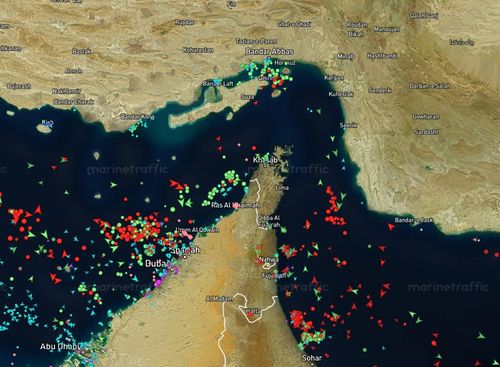
Questions linger over whether this maritime war strategy will achieve Trump’s goal of reopening the Strait to commercial ships.
According to a report by Lloyd’s List Intelligence, the threats put an end to the limited shipping traffic that resumed in the strait since the ceasefire. Maritime trackers say more than 40 commercial ships have crossed since the ceasefire began last week, down from about 100 to 135 ship passages per day before the war.
But the consequences will be felt far beyond Iran. The price of Brent crude oil, the international standard, rose 7 percent on Monday to hover around $102 ($145) a barrel. Before the war it cost about $70 a barrel.
Senator Mark Warner of Virginia, a leading Democrat on the Senate Intelligence Committee, told CNN that he “doesn’t understand how blocking the Strait will somehow encourage the Iranians to open it.”
Iran’s Islamic Revolutionary Guard Corps (IRGC) warned that any warship approaching the Strait would be considered a violation of the ceasefire and would be responded to “severely and decisively.”
Iranian Parliament Speaker Mohammad Bagher Ghalibaf said any US blockade would only increase oil prices.
“Enjoy the current pump numbers,” he said in a post on X, pointing to current fuel prices in the US.
“With the so-called ‘blockade’ you’ll soon be nostalgic for $4-$5 gas.”
NEVER MISS A STORY: Get the latest news and exclusive stories first by following us on all platforms.