News
Federal budget 2026: What you can expect in this year’s federal budget

The budget will include three core packages – tax reform, austerity, and productivity and investment – aimed at tackling the intergenerational inequality challenges faced by young people.
Here’s what to expect when Chalmers announces his budget later this month.

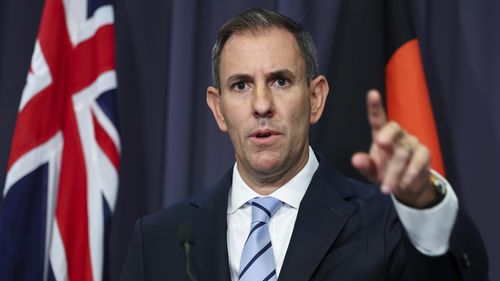
The specific reforms, including whether there will be provisions on grandfathering provisions for investors using the discount and negative gearing, are still a bit of a mystery.
The government has not confirmed the changes but has repeatedly failed to rule them out when given the chance. Chalmers and Prime Minister Anthony Albanese instead said the budget will tackle intergenerational unfairness in the tax system and housing market.
“What we are determined to see is a fairer economy that works for more people, including young people,” Chalmers said this week.
If reformed, it would be the first time the CGT discount has been reversed since the Howard government increased it to 50 percent in 1999, and the first time negative gearing has been changed since it was temporarily limited by the Hawke/Keating government in 1987.
In his pre-Budget speech in March, Chalmers said the tax reform package would also make the system simpler and more sustainable and boost business investment, but only “if we can afford it”.
“How much of that we can do in May depends a bit on budget considerations, international developments and of course also on cabinet deliberations,” he said at the time.
Changes include stricter criteria, standardized and evidence-based assessments, fraud prevention and reduced spending on social and community participation per participant and daily activities.
Early modeling shows the changes will reduce the number of people on the NDIS from 760,000 to 600,000 by the end of the decade.
“It costs too much and is growing too fast,” Butler said in April.
“We cannot afford for the NDIS to continue to grow at its current rate.”
US President Donald Trump has pressured Australia and NATO countries to increase their defense spending, complaining that the US is doing much of the heavy lifting.

It was estimated that the measure would reduce fuel costs by 26.3 cents per liter and almost $19 on a 65 liter tank.
The Australian Competition and Consumer Commission is monitoring fuel prices across the country to ensure cost savings are passed on.
NEVER MISS A STORY: Be the first to receive your latest news and exclusive stories by following us on all platforms.