News
Pakistan proposes second round of US-Iran talks as standoff deepens

Although last week’s ceasefire appeared to hold, the confrontation over the Strait of Hormuz risked reigniting hostilities and exacerbating the economic fallout of the regional war.
Meanwhile, direct talks between Israel and Lebanon were set to begin in Washington, the first such negotiations in decades.

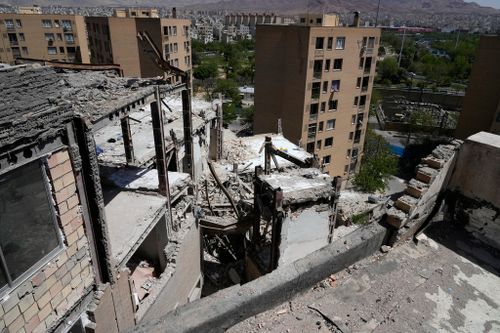
Pakistan proposes second round of Iran talks
Talks aimed at finally ending the conflict in Iran – which began on February 28 with US and Israeli attacks on Iran – failed to reach an agreement last weekend, although Pakistan has proposed a second round in the coming days.
Two Pakistani officials, speaking on condition of anonymity because they were not authorized to discuss the matter with the media, said the initial talks were part of an ongoing diplomatic process and not a one-off effort.
Two U.S. officials said Monday that discussions were still ongoing about a new round of talks. A diplomat from one of the mediating countries said Tehran and Washington had agreed.
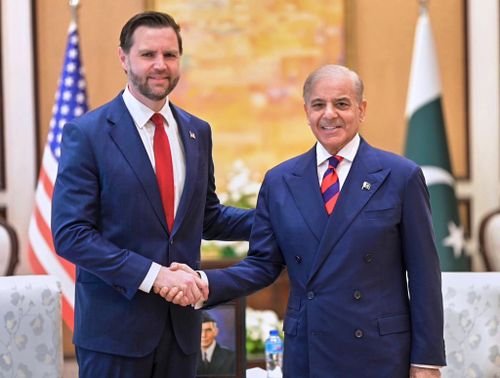
U.S. officials said the talks could take place on Thursday. The location, timing and composition of the delegations had not yet been determined, although Islamabad and Geneva are considered as host cities.
The U.S. officials and the diplomat spoke on condition of anonymity to discuss sensitive diplomatic negotiations.
The war, now in its seventh week, has shaken markets and roiled the global economy as shipping has been cut off and airstrikes have torn apart military and civilian infrastructure across the region.
The fighting has killed at least 3,000 people in Iran, more than 2,000 in Lebanon, 23 in Israel and more than a dozen in the Gulf Arab states. Thirteen American soldiers have also been killed.
Tankers turned around after the blockade took effect
The blockade is intended to put pressure on Iran, which has exported millions of barrels of oil since the start of the war, mainly to Asia. Much of it has likely been borne by so-called dark transits that evade sanctions and surveillance, creating a cash flow that has been critical to keeping Iran afloat.
Both the nature of enforcement and the extent to which ships will comply remained unclear during the first full day of the blockade on Tuesday. Tankers approaching the strait on Monday turned around shortly after the strait went into effect, although one tanker changed course again and transited the waterway early Tuesday.
The tanker Rich Starry was waiting off the coast of the United Arab Emirates, according to shipping data firm Lloyd’s List, which cited data from energy cargo tracking company Vortexa. It was not immediately clear whether the tanker had previously docked in Iran. Yet it was listed by the U.S. Treasury Department’s Office of Foreign Assets Control as linked to Iranian shipping.
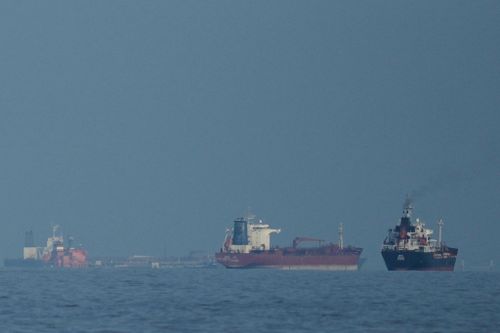
Lloyd’s List reported, based on ship registration and tracking data, that the ship is owned by a Chinese shipping company and is ultimately bound for China.
U.S. Central Command did not immediately respond to questions about the tanker after it cleared the nearly 21-mile waterway. A day earlier, the Central Command said the blockade applied to ships going to and from Iranian ports.
Since the start of the war, Iran has restricted maritime traffic, with most commercial ships avoiding the waterway.
Iran’s effective closure of the strait, through which a fifth of the world’s oil passes in peacetime, has sent oil prices soaring, raising the cost of gasoline, food and other basic goods far beyond the Middle East.
US President Donald Trump said on Monday that Iranian control of the strait amounted to blackmail and extortion as the US blockade took effect. He said in a social media post that the Iranian navy had been “completely destroyed” but still had “fast attack ships.”
He warned that “if any of these ships come anywhere near our BLOCKADE, they will be eliminated immediately.”
Iran threatened to retaliate against Persian Gulf ports if the country were attacked.
“If you fight, we will fight,” Iranian parliament speaker Mohammad Bagher Qalibaf said in a statement addressed to Trump.
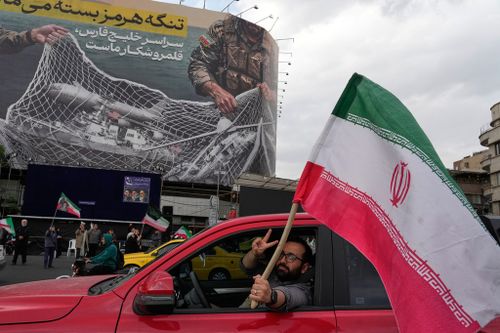
French President Emmanuel Macron and British Prime Minister Keir Starmer will co-chair a conference on Friday for countries willing to use warships to escort oil tankers and container ships through the Strait of Hormuz.
The deployment will take place “when security conditions allow,” Macron’s office said on Tuesday.
Israel and Lebanon scheduled for talks
The Washington talks between Israel and Lebanon were expected to be preliminary and focus on setting parameters rather than resolving core issues.
After more than a year of almost daily attacks in southern Lebanon, Israel escalated its offensive in the early days of the war with Iran after Hezbollah launched rockets at Israel. Lebanese authorities say the fighting has carved a path of destruction from agricultural towns near the border to Beirut, killing more than 2,000 people and displacing more than 1 million others.
Following the ceasefire in Iran, Israel continued its air and ground campaign and stressed that the ceasefire does not apply to the fighting in Lebanon. However, it has halted strikes in the country’s capital since April 8, following a deadly bombing that hit several busy commercial and residential areas in central Beirut. It sparked international outrage and threats from Iran to end the ceasefire.
Lebanese officials have urged a ceasefire. Israel has framed negotiations around Hezbollah’s disarmament and a possible peace deal without publicly committing to a cessation of hostilities or withdrawal of its forces.
Israel wants the Lebanese government to take responsibility for disarming Hezbollah, just as envisaged in the November 2024 ceasefire. But the militant group has survived decades of attempts to curb its power and said Monday it will not abide by any agreements that could emerge from the talks.
Israeli Foreign Minister Gideon Saar on Tuesday floated the idea of working with the Lebanese government to dismantle Hezbollah.
NEVER MISS A STORY: Be the first to receive your latest news and exclusive stories by following us on all platforms.