News
School camps could be under threat as fuel crisis continues to sting

Australia’s peak outdoor education body today issued an open letter to policymakers in response to growing concerns from struggling service providers.
“Schools are canceling camps due to higher transport costs,” said Lori Modde, president of the Outdoor Council of Australia.

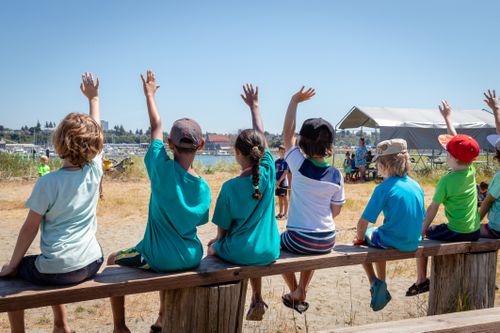
“Regional adventure tourism operators are seeing visitors postponing or canceling trips, booking hesitations and reduced travel confidence.”
Outdoors Victoria chief executive Andrew Knight said suppliers have levied five to 25 per cent surcharges on bus transport and other services the sector needs.
“Other suppliers have already said that there will be additional surcharges on the delivery of other things, like gas for showers or other food items and anything else that is delivered to the school camps on trucks,” Knight said.
“We’re talking about hundreds of schoolchildren in each school camp, so that’s a lot of food that has to go to regional and national locations every week.”
Hall’s Outdoor Education Managing Director, Anthony Hall, said his fuel bill has skyrocketed from $3,000 to $4,000 a week to $10,000.
What’s worse, he and many other outdoor education providers have no choice but to cover the costs themselves
“All of these contracts are committed 12 months in advance, so we can’t go back to our customers and say, ‘Hey, we need more money,’” Hall said.
‘Right now we’re absorbing all that in the hope that the fuel crisis won’t last too long.
“We work with minimal margins anyway, so at the moment we are just waiting, hoping that prices will drop so that we don’t actually go under.”
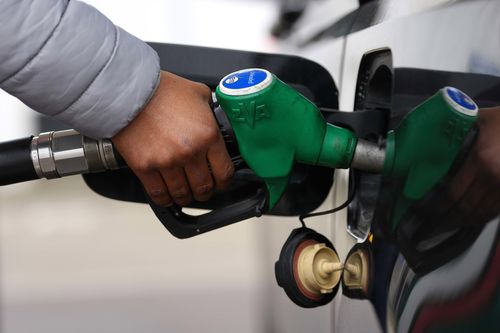
Gemima Weiler, CEO of Bindaree Outdoor Education, said her company has not yet lost any customers to the fuel crisis, but said she and other outdoor education providers were stuck in an expensive catch-22.
“It’s very difficult to pass on these kinds of huge increases from an outside vendor to a school with fixed costs,” Weiler says.
“They would have budgeted for that eight months, nine months in advance, and if all of a sudden we passed another $2,000, $3,000, $4,000 to them, the school would run out of money.
“But the problem is if we don’t run those camps, we’re going to lose hundreds of thousands of dollars.
“So it’s like, do we take that $2,000, $3,000 hit and not pass it on to our customers because of affordability and timeliness and everything else? But then where does that leave the business if we have to withhold not only the back-end operating costs of fuel, but also our initial customer costs to get providers to actually get these kids out.”

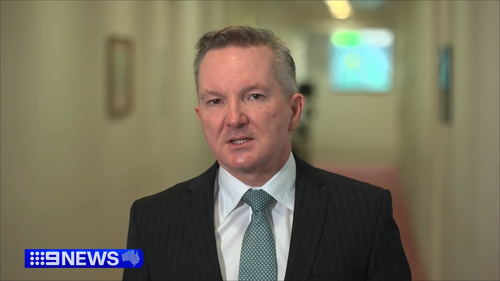
Weiler fears the impact on children could be “major” if school camps are canceled due to uncontrollable price increases.
”[Camps] they teach resilience, they push the comfort zones and get them self-confidence and work on team building and community and all those things that you need to be strong, healthy individuals, but also to just be physically in nature and have good mental health,” she said.
“The more fuel prices rise, the first people to drop out will be the children who may need it most, namely lower socio-economic schools or public schools.
‘If we have to stop programming again in Victoria [after COVID]there are still hundreds and thousands of children who will miss the camp experience and it will not be picked up at a later date.
The sector is advocating for state, territory and federal governments to prioritize the outdoor education sector in their policymaking.
“If governments, both state and federal, decide that they need to ration fuel, we urge those governments to ensure that students are not stranded at camp, or unable to get to camp because their school buses do not have the fuel they need to get them there,” Knight said.
“That is probably our biggest appeal to state, territory and federal governments: we are on the list of those who must operate for our community and for the functioning of our society.”
NEVER MISS A STORY: Be the first to receive your latest news and exclusive stories by following us on all platforms.