News
WHO chief visits eastern Congo as outbreak begins to outmatch response

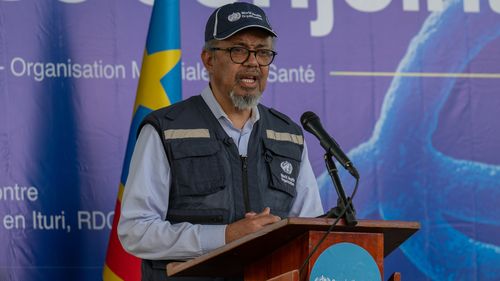
WHO Director-General Tedros Adhanom Ghebreyesus stressed the importance of building community trust and ensuring safe burials to prevent the spread of the outbreak, and urged countries to reconsider travel bans and border closures as they “discourage transparency”.
“The Democratic Republic of Congo has had 16 Ebola outbreaks and has ended each outbreak. This is the 17th. That history really gives me confidence,” Tedros said alongside Congo’s health minister.

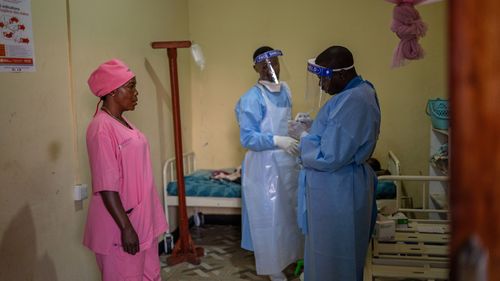
The health agency said the latest official figures showed 906 suspected cases and 223 suspected deaths. Neighboring Uganda has confirmed nine cases and one death.
There is no approved treatment or vaccine for the Bundibugyo virus, the current strain of Ebola.
Medical aid donated by the European Union arrived in Bunia, Ituri province on Thursday. More shipments are expected in the coming days. The US announced US$80 million ($111.2 million) in additional aid on the same day, bringing the total pledge to almost US$130 million.
Response efforts at Bunia’s Rwampara and general hospitals appeared better organised, with additional staff, protective equipment and medical supplies, although patients continue to arrive around the clock, an Associated Press reporter said.
The response has failed to keep pace with one of the fastest-spreading outbreaks on record, Doctors Without Borders warned.
“Never before have so many cases been recorded so quickly in an Ebola outbreak,” says Dr. Alan Gonzalez, deputy director of operations for Doctors Without Borders, said in a statement.
“No one knows the true extent and severity of this outbreak.”
Gonzalez called for an immediate expansion of testing, faster deployment of first responders and sustainable access to medical supplies.
The dangers health workers face have been compounded by anger among residents over strict medical protocols for handling the victims’ bodies, which conflict with local burial rituals. Residents have launched at least three attacks on health centers.
“We’re not here to tell people what to do, we’re here to listen,” Tedros said.
“Building trust takes time, and it starts with listening.”
“I understand how painful it is to lose someone, and how much it means to honor him or her properly, but certain practices, including touching the bodies of those who have died from Ebola, can further spread the virus,” Tedros said.
Attacks in Ituri by the allied Democratic Forces, a rebel group linked to Islamic State, and a coalition of ethnic militias have also hampered the response.
The disease has also been reported in the Congolese provinces of North Kivu and South Kivu, south of Ituri, where the Rwandan-backed rebel group M23 controls many key cities, including Goma and Bukavu. The rebels have reported two cases.
Uganda and Rwanda have closed their borders, while the Trump administration last week banned entry to non-US passport holders who had recently visited Congo, Uganda or South Sudan.
“I would also ask countries that have imposed travel bans or border closures to reconsider,” Tedros said, saying such measures “discourage the transparency that saves lives.”