News
US-Iran war: Trump says deadline for Congress to approve Iran war doesn’t apply: Hostilities have ‘terminated’
That deadline would already expire without action from Republican lawmakers, who turned to the US president.
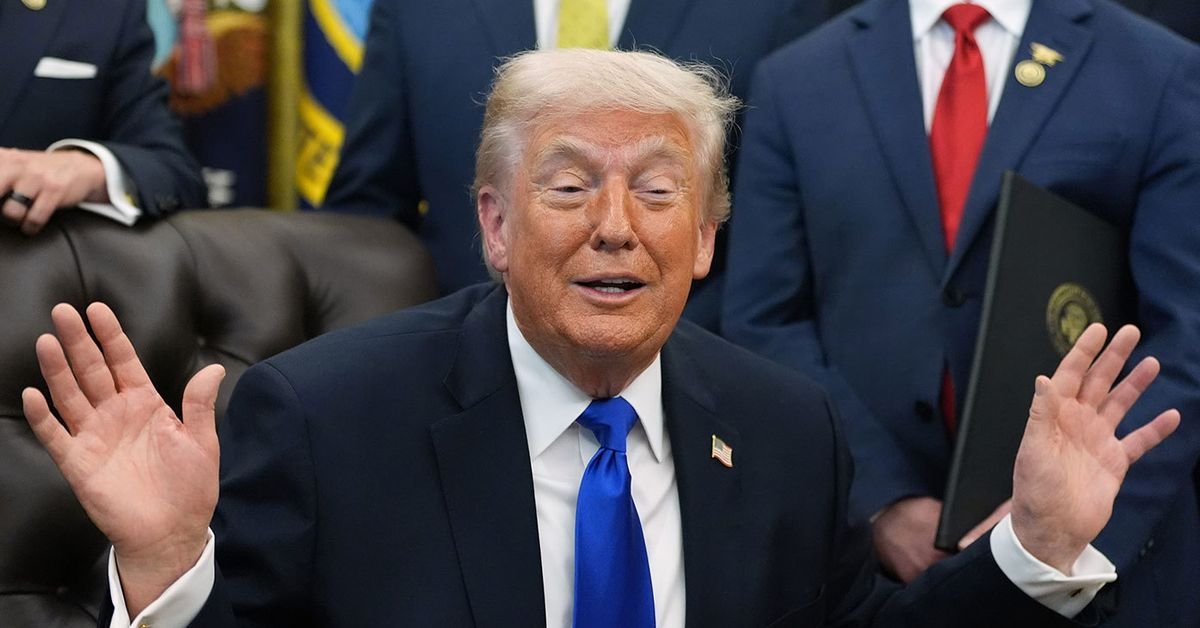
“The hostilities that began on February 28, 2026 have ended,” wrote Trump, House Speaker Mike Johnson, R-La., and Sen. Chuck Grassley, R-Iowa, the Senate president pro tempore.
Yet he also made it clear in the letter that the war may be far from over.
“Despite the success of U.S. operations against the Iranian regime and continued efforts to secure a lasting peace, the threat Iran poses to the United States and our armed forces remains significant,” the U.S. president said.
Under the 1973 War Powers Resolution, Congress must declare war or authorize the use of force within 60 days (Friday was the deadline), or within 90 days if the president requests a delay.
This Congress did not try to enforce that demand and left town for a week on Thursday after the Senate rejected a Democratic attempt to stop the war for the sixth time.
Some Republican senators are starting to worry about the timeline of the war, which Trump initially said would last a few weeks.
But Trump’s letter showed how the president continues to shy away from congressional approval.
It claims that the deadlines set by law do not apply because the war in Iran effectively ended when a shaky ceasefire began in early April.
The Republican debate over the war
Senate Majority Leader John Thune, R-S.D., said Thursday that he did not plan to hold a vote to authorize violence in Iran or otherwise interfere.
“I listen carefully to what the members of our conference are saying, and right now I don’t see that,” Thune said.
The reluctance to face Trump on the war comes at a politically dangerous time for Republicans, with public frustration mounting over the conflict and its impact on gas prices.

Sen. Kevin Cramer, R-N.D., said he would vote to authorize war if Trump asked.
But Cramer questioned whether the resolution passed during the Vietnam War as a way for Congress to regain its power was constitutional.
“Our founders have created a very strong executive, whether we like it or not,” says Cramer.
Some Republican senators have made clear that they ultimately want Congress to have a say.
Sen. Todd Young of Indiana said in a statement that lawmakers “must ensure that the people, through their elected representatives, weigh in on whether our military should go into battle.”
He added that since the Trump administration states that “the conflict with Iran has ceased, there should be no more hostilities,” and that if the conflict resumes, he expects the White House to work with Congress to authorize the use of military force.
Some Republicans say they want a vote
A handful of Republican senators have been saying for weeks that Congress must at some point assert its authority over the war.
One of them, Susan Collins of Maine, voted with Democrats for the first time on Thursday to end the war.
She said in a statement that she wants to see a defined strategy to end the conflict.
“The president’s authority as commander in chief is not unlimited,” Collins said.
She added that the 60-day deadline “is not a suggestion, but a requirement.”

In addition to Collins and Young, Republican Senators John Curtis of Utah, Thom Tillis of North Carolina, Lisa Murkowski of Alaska and Josh Hawley of Missouri, among others, have said they would like to see a vote eventually.
Curtis said he would not support continued funding of the war until Congress voted to authorize the war.
“It is time for decision-making by both the administration and Congress, and it can be done in partnership with each other, not in conflict,” Curtis said.
Thune suggested the White House should increase its outreach to lawmakers through briefings and hearings if it wants continued support from Capitol Hill.
“Obviously, getting readouts from our military leadership on a somewhat regular basis, I think, is going to be helpful in terms of shaping the opinions of our members about how comfortable they are with everything that’s happening there, and the direction moving forward,” Thune said.
The administration states that the deadline does not apply
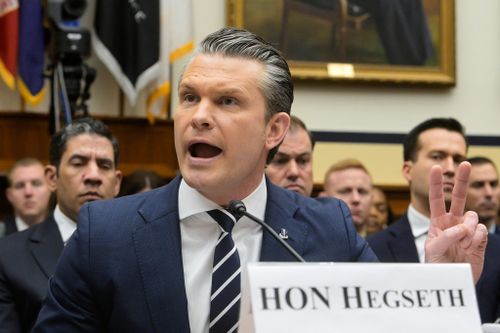
Trump echoed Hegseth’s argument, insisting that other presidents had also not sought congressional approval, as mandated by the 1973 law.
“Every other president thought it was totally unconstitutional, and we agree with that,” Trump said at the White House as he left for Florida.
Democrats scoffed at the suggestion that May 1 was not the real deadline.
Sen. Richard Blumenthal, D-Conn., said on social media: “There is no pause button in the Constitution or the War Powers Act. We are at war. We have been at war for 60 days. The blockade alone is an ongoing act of war.”
The development came as no surprise to at least one House Democrat who oversees the military.
Washington Representative Adam Smith, the top Democrat on the House Armed Services Committee, told The Associated Press: “Is there an expectation that the Trump administration is going to follow the law? I don’t have that expectation.”
NEVER MISS A STORY: Be the first to receive your latest news and exclusive stories by following us on all platforms.