Celebrity
British royal family: How well do King Charles, Princess Anne, Andrew Mountbatten Windsor and Prince Edward get along?
By Hannah Furness
It was four days after the death of Elizabeth II that the nation saw her four children come together.
The new King Charles, Princess Anne, Prince Andrew and Prince Edward stood silently in vigil, backs turned to her coffin in St Giles’ Cathedral, Edinburgh, heads bowed.
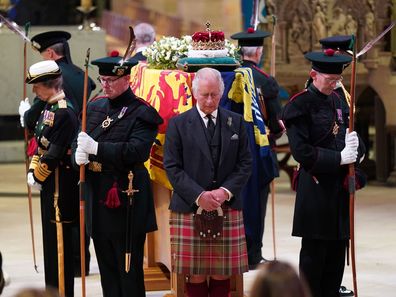
Andrew Mountbatten-Windsor, then still a Prince and the Duke of York, had been permitted to wear his military uniform; Anne had travelled with her mother from Balmoral, where she had been the only member of the family at her bedside when the time finally came.
The photograph made front pages around the world.
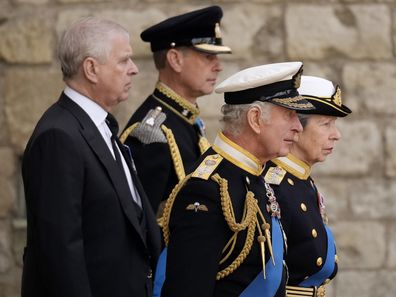
It was striking not just for its solemnity, but for its symbolism: the very unusual sight of the four of them standing together, captured for the history books.
For they are entirely different characters, with different upbringings, and their own working and personal lives. Rarely seen interacting in public, they were nevertheless supposed to have been crucial parts of the family firm all their lives.
READ MORE: Queen Mary announces death of ‘beloved father’ John
READ MORE: Harry and Meghan rub shoulders with Hollywood bigwigs
READ MORE: Cate Blanchett’s ‘brutal’ memory of early career
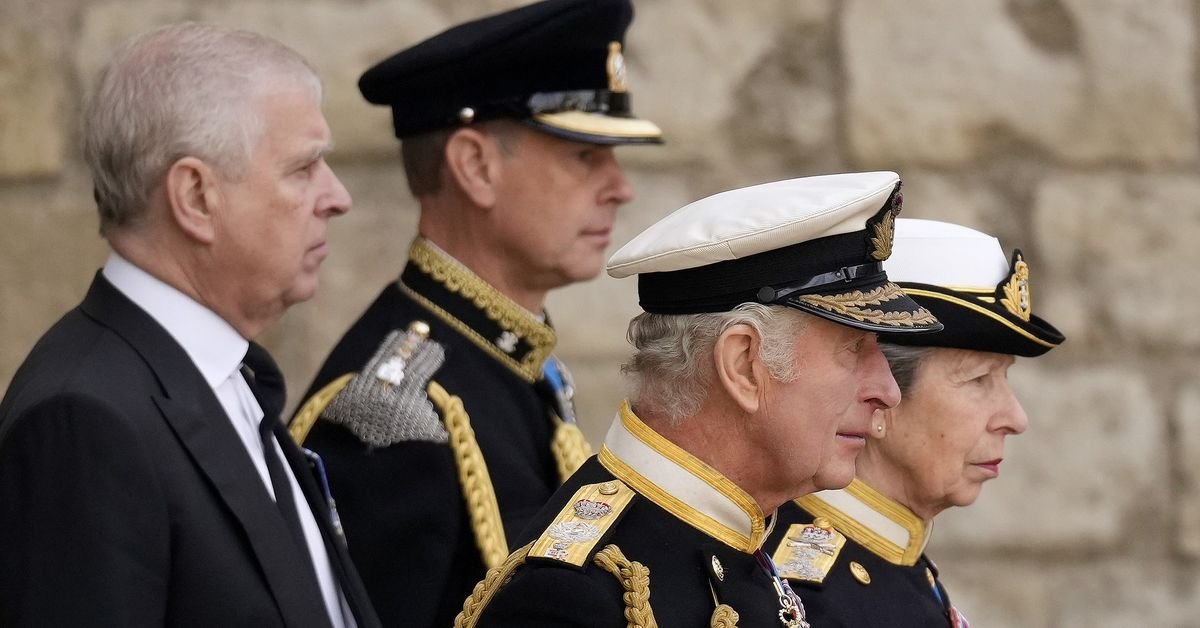
Now, with Andrew first embroiled, and then engulfed, by the Epstein scandal, everything has changed.
And so news that Prince Edward, now the Duke of Edinburgh, has visited his banished brother Andrew for lunch has piqued the public’s interest. The Princess Royal is said to have telephoned.
Buckingham Palace has not confirmed or commented on any personal contact between the siblings.
But the notion that contact exists, even now, has reassured some who have worried for Andrew’s wellbeing as he undergoes police investigation for misconduct in public office in the face of extreme pressure over the Epstein files.
He may be a former prince, but he remains a brother. And while his relationship with his mother is well documented, that with his sister and brothers is not. So just how well do the late Queen’s four children get along?
In exile of sorts at Sandringham, Andrew has had few visitors, and even fewer public olive branches, thrown from a Royal family acutely aware of the accusations against him.
The King, as King, has had to take the firmest of lines. He has stripped his younger brother of his titles and honours, compelled him to move out of Royal Lodge against his much-publicised will and issued a statement of support for Epstein’s victims.
Prince Edward, answering a question from a US journalist on stage in Dubai for an unrelated event about youth opportunity, said: “I think it’s all really important, always, to remember the victims and who are the victims in all this”.
Princess Anne, who has been shouted at by protestors more than once, has not yet uttered a word in public.
Emily Maitlis, who conducted the Newsnight interview that sealed Andrew’s downfall, has said she was told, “there was a bit of nervousness from the siblings… From Prince Edward and from Princess Anne, who didn’t want their eldest brother to go too hard on their other brother, Andrew”.
It is not a conundrum they would have expected to face.
The siblings have been in each other’s lives for 62 years, with a 16-year age gap between Charles and Edward.

They have been split into pairs in the public imagination – Charles and Anne (born in 1948 and 1950), then Andrew and Edward (1960 and 1964) – by virtue of a newly acceded Queen and Prince Philip putting duty before domesticity in waiting to have a much-wanted “second family”.
Their generation does not have quite the mythology of their elders, nor the casual contact of their own children.
Before them George VI, the Queen Mother, Princess Elizabeth and Princess Margaret called themselves “us four”, and the sisters spoke on the telephone near-daily throughout their whole lives.
Now Prince William and his cousins keep in touch by WhatsApp, once confirmed by Mike Tindall as their method of choice for arranging meet-ups.
The future generation: Prince George, Princess Charlotte and Prince Louis, are being brought up to be as close to one another as possible, by parents mindful that they, too, will support each other through a lifetime no one else can quite understand.
The royal nursery of the 1940s, 1950s and 1960s, meanwhile, was not quite so harmonious.
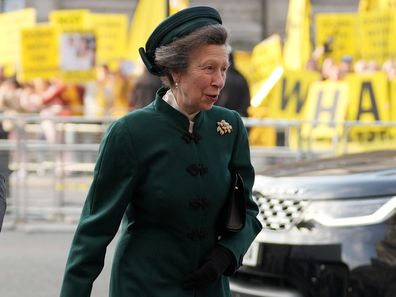
The infant Prince Charles was born into a life of strict formality; the young Princess Elizabeth deferring to the experience of nanny Helen Lightbody, who ran the tightest of ships.
Charles and Anne, whose mother became Queen when they were aged three and one, respectively, were left in the care of nannies and grandparents while Elizabeth and Philip travelled the world.
“They were terribly polite”, the Queen once said of her children’s greeting after a six-month Commonwealth tour in 1953. “I don’t think they really knew who we were.”
When the children were ill, they were isolated from the Queen for fear of it affecting her public duties.
At odds with her reputation as a hands-off mother – a product of her age – are her letters, which show her besotted with the baby Charles. “He is most affable and laughs a great deal,” she wrote to a friend when he was five months old.
Of the royal nursery, Jonathan Dimbleby records in his official biography of Charles that “the little girl [Anne] seemed noisy, wilful and fearless, while her elder brother was sweet-natured but withdrawn, a vulnerable little boy by whose gentleness they [staff] were captivated”.
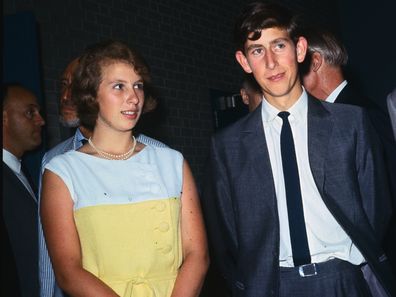
Royal biographer Paul James wrote: “The Queen was acutely aware that she had missed much of Charles’s and Anne’s childhood.
“On occasions her elder son appeared quiet and withdrawn, confused and daunted by the gradual realisation of his royal destiny.
“Princess Anne, conscious that her brother was treated differently because he was future King, became rebellious and unruly.”
Nevertheless, the children were close.
The young Charles and Anne played and gardened together, holding hands in their prams, and were photographed cuddling one another.
“As a child, he had doted on his sister,” says Dimbleby, reporting that news of Anne’s engagement to Mark Phillips had left an adult Charles with an “overwhelming sense of loss and insecurity”.
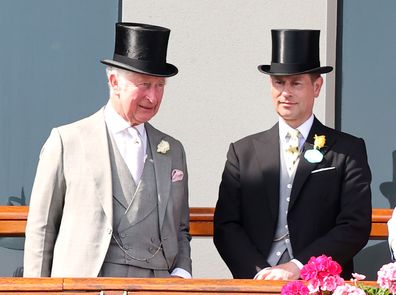
The siblings went to different schools: Charles to Gordonstoun, where he was bullied relentlessly and longed for home, and Anne to board at Benenden, where she thrived under the stability.
By the time Princes Andrew and Edward came along, both Charles and Anne were away from home for long stretches.
Charles, who moved from school to Australia to Cambridge to the Navy, was said to be more like an uncle to Edward.
He “spent hours” playing with both younger brothers in the nursery when he was at home, and wrote children’s story The Old Man of Lochnagar for them.
By this time, says James in his biography of the current Duke of Edinburgh as a young man, “when given a second chance at motherhood, the Queen, within the confines of her public role, gave her younger sons priority. As a result, a far happier childhood lay in store for Prince Edward than his eldest brother”.
By then, the Queen and Prince Philip could fly rather than sail on overseas tours, reducing their time away.
The Queen would wear a rubber apron to do bath time with her two youngest, giving nanny Mabel Anderson Wednesday nights off so she could do their full playtime and bedtime routine.
She encouraged more affection in a lively nursery where the boys’ characters were already beginning to show themselves.
Ingrid Seward, in her 1995 book Royal Children, found: “Andrew bullied everybody and would constantly swipe his younger brother.
“If he saw Edward going for a particular cake, Andrew would try and grab it first.”
Others tell how Andrew would get Edward into trouble with the footmen.
The younger brother, who once described himself as having the schoolboy reputation of a “a proper little goody goody”, eventually stood up for himself and would wrestle Andrew to the ground.
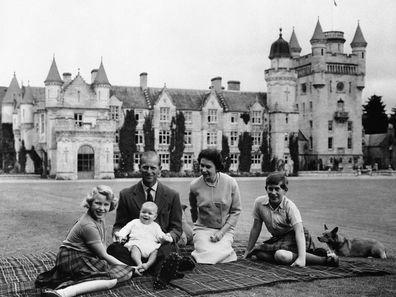
Princess Anne is said to have been something of a “surrogate mother” during her school holidays when the Queen was away.
Prince Charles would play games with Edward and take him birdwatching in Scotland. They have a shared love of theatre and the arts. When Edward smarted over being left out of family plans to go to the Edmonton Commonwealth Games in 1976, it was Charles who intervened to put him on a plane.
When he left the Royal Marines, it was Anne to whom he turned. She encouraged him to stay with her at Gatcombe, her Gloucestershire home, while he dealt with the fallout from that decision. He was page boy at her first wedding, as well as best man to Andrew when he wed Sarah Ferguson in 1986.
Edward and Anne are unexpectedly alike in temperament, it is said.
“Neither will suffer fools gladly, and each has a fiery temper when aroused,” writes James. “Both have a stern exterior that can mask their deep compassion and caring nature. They also share a love of horses and a preference for competitive individual sports over team games.”
Prince Charles, who had both of his brothers as “supporters” at his wedding to Lady Diana Spencer, was not always at odds with Andrew.
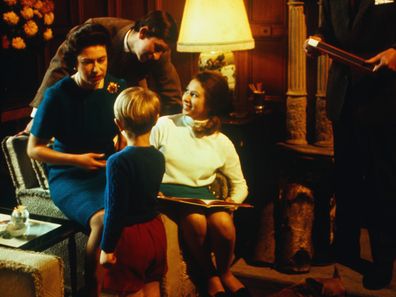
While in the Royal Navy, Charles invited the 16-year-old Andrew to his ship while it was moored on the coast of Scotland, an outing biographer Catherine Mayer considers as “perhaps serving as inspiration for his own naval career”.
They had entirely different experiences at their Scottish boarding school, which Andrew credited in a speech with informing “every stage of my life” in the positive sense.
Those who know them readily concede their “very different characters”.
As young princes, there was rivalry: Andrew, at the height of public opinion as a Falklands war hero with a rose between his teeth, smarted over being the “spare”.
Their first marriages, each eventually unhappy in their own way, saw them and their wives pitted against one another in the press.
As the Royal family’s news cycle moved on to a younger generation, the four siblings settled into their own lives: living and working separately, speaking on the phone and via private secretaries, and getting together for the usual high days and holidays each year.
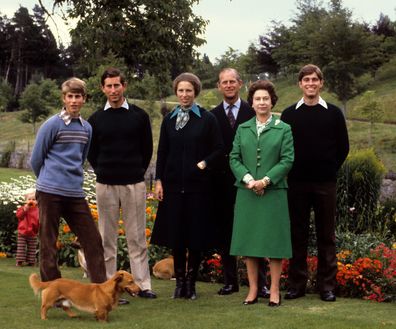
There is a shared love of horses: polo for the younger Prince Charles, eventing for Anne, riding for Andrew. Edward has encouraged his daughter, Lady Louise Mountbatten-Windsor, to follow Prince Philip’s hobby of carriage driving.
In later times, there was a period of joint endeavour from Charles and Andrew, who moved to make staff changes at Buckingham Palace while the late Queen was still alive, ousting her private secretary Sir Christopher Geidt in what has been described as a “pincer movement”.
The King, who friends say is “not an unsympathetic man”, allowed Andrew to make a comeback for family events several times, bringing ex-wife Sarah Ferguson back from the cold and into Sandringham after decades.
But post Epstein files, everything has changed.
Nowadays, there is little love lost between Andrew, whose campaign to stay in his former home was so briefly successful that it gained the nickname, “the siege of Royal Lodge”, and the King, who has to live with the consequences of Andrew’s actions for the monarchy.
Publicly, at least, the four children, now in their 60s and 70s, are unlikely to be in the same place again for the foreseeable future. But their history, and the ties of their unique upbringing, cannot be undone.
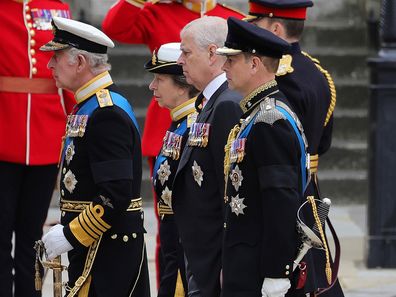
Ahead of the King’s Coronation in 2023, there was one moment that stood out.
The Princess Royal, in ceremonial military uniform as Gold Stick-in-Waiting, greeted her brother with a cheerful: “Hello, Old Bean”.
“You made it,” exclaimed the King, surrounded by aides and being dressed in his robe.
He laughed, kissed her hand, and looked for a brief moment like the world had been lifted from his shoulders.
For both in their most formal and informal moments, no one knows the realities of the lives of Elizabeth II’s four children better than each other.