News
The ‘archaic’ rule forcing the disabled to choose between ‘love and survival’
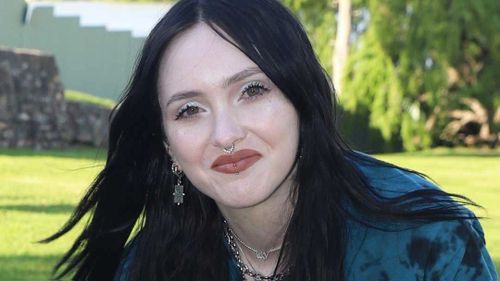
Adelaide woman Abby Brothers has been with her partner for 15 years, since they were both teenagers.
The pair grew up together, weathered the highs and lows of young adulthood, and survived the grueling schedule of his fly-in-fly-out (FIFO) work in the mines.
But at 30, Brothers says they’re stuck in a state of enforced uncertainty, unable to take the next step in a long-term relationship: moving in together.

For Brothers, who lives with Myalgic Encephalomyelitis (also known as Chronic Fatigue Syndrome), POTS and endometriosis, moving into shared accommodation would mean the immediate loss of her Disability Support Pension (DSP).
“We’ve been together for 15 years and we can’t accomplish anything – move in together, get married – without losing my financial independence,” Brothers said.
“That option has been taken out of my hands if I want to remain somewhat independent. Being able to buy my own medicine or pay for my own appointments without having to ask anyone is a big thing.”
Brothers is one of the thousands of social assistance recipients who are calling for an end to the partner income test in a new online campaign.
Under the welfare rule, Centrelink will reduce or end benefits if a recipient moves in with a romantic partner whose income reaches a certain threshold.
If a recipient’s combined income with their spouse is more than $380, their payments will be reduced by 50 cents for every dollar.
Critics say the ‘archaic rule’ traps people, especially disabled Australians, in poverty or in some cases unsafe home situations.
A ‘1950s mentality’ in an economy of 2026
The Partner Income Test was formally introduced in Australia in 1947 through the Social Services Consolidation Act, which is based on the ‘breadwinner model’ and assumes that a partner will – and must – provide for their partner.
The government’s argument for retaining the test is that Australia’s welfare system is “income-based and needs-based”, with the “unit of assessment” remaining the couple and not the individual.
But advocates argue that this “1950s way of thinking” ignores the reality of the modern cost-of-living crisis and the specific needs of disabled people.
Brothers, who currently lives with her parents, receives about $1,100 every two weeks through the DSP.
She says much of this reimbursement is eaten up by expensive drugs that are not covered by the Pharmaceutical Benefit Scheme (PBS).
“My personal cost of living is higher than other people’s because of medical costs,” she said.
“If me and my partner were to live on his income alone, my standards are higher than anyone else’s.
“Plus, there aren’t many single-income households anymore because you just can’t afford it.”
In Newcastle, 30-year-old Elle faces a similar dilemma. Living with complex PTSD, Ehlers-Danlos Syndrome and chronic migraines, she has overcome first-hand the pressures the means test places on relationships.
“The government just assumes that a partner will take care of you. They are not legally obliged to do so,” said Elle, who asked that her last name be withheld.
“It’s something I always think about when I’m dating. It puts a lot of people at risk, especially women and First Nations people.”

A national survey launched earlier this month as part of the campaign has already seen more than 500 people tell stories of financial hardship and barriers to independence, Redjeb said.
“The response has been overwhelming,” Redjeb said.
“The data already shows that the PIT acts as a trap. It forces total financial dependence and creates dangerous barriers for people in situations of domestic violence.”
The campaign also follows calls from People with Disability Australia to scrap the means test for people on the DSP.
The Greens support the aim to abolish the partner income test.
Greens Senator Penny Allman-Payne, the party’s spokesperson for the elderly and disabled, called the policy “blatant discrimination”.
“It is disgusting that in 2026 the government thinks this is an acceptable way to treat people with disabilities, who are already experiencing intimate partner violence at a higher rate,” said Senator Allman-Payne.
“No one should be forced to choose between love and survival.”
The federal government, however, appears unmoved. When Allman-Payne was questioned about the issue in Parliament in December 2025, Women’s Affairs Minister Katy Gallagher indicated that Labor had no intention of reviewing the rule.
“I think this has been a part of the welfare system for a long time, and I am not aware of any plans to change that,” Senator Gallagher told the House.
A Department of Social Services spokesperson told nine.com.au the partner income tests apply to all social security benefits and are based on the principle that couples can pool their resources and share living costs such as rent and utility bills.
“A person may be excluded from the partner income test in the event of hardship, abuse or family and domestic violence,” the spokesperson said.
“This allows them to pay a higher single rate and protects them from partner income test rules.”
Brothers told her and many others that this “long term trait” felt more like a life sentence.
“Being unwell is an isolated situation,” she said.
“The rule is outdated and needs significant revision. You shouldn’t have to choose between the person you love and the money you need to survive.”
NEVER MISS A STORY: Be the first to receive your latest news and exclusive stories by following us on all platforms.